

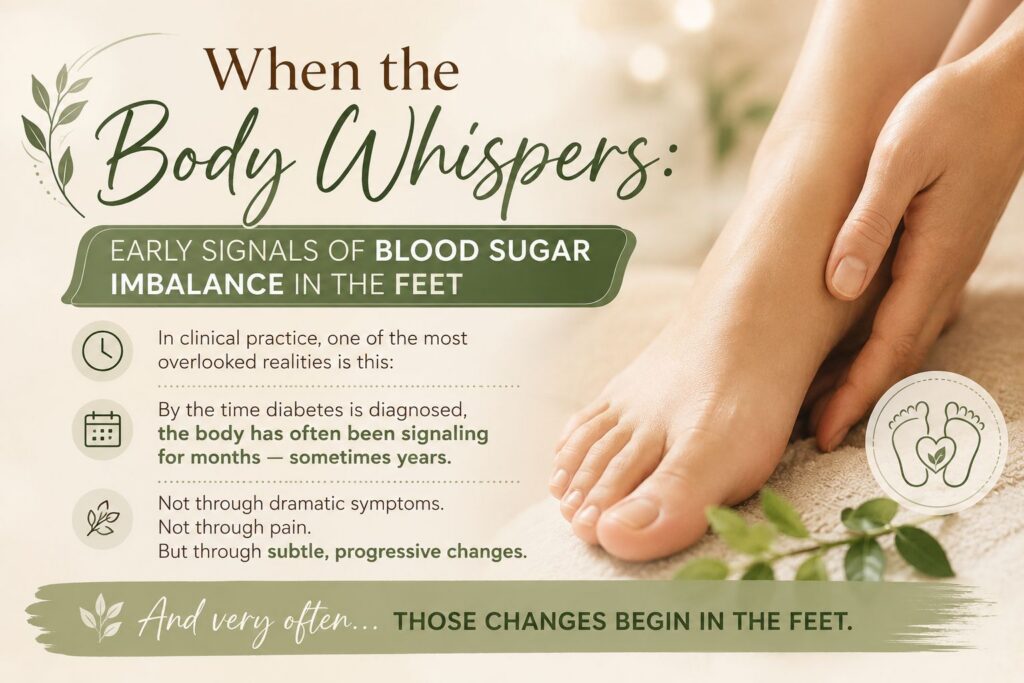
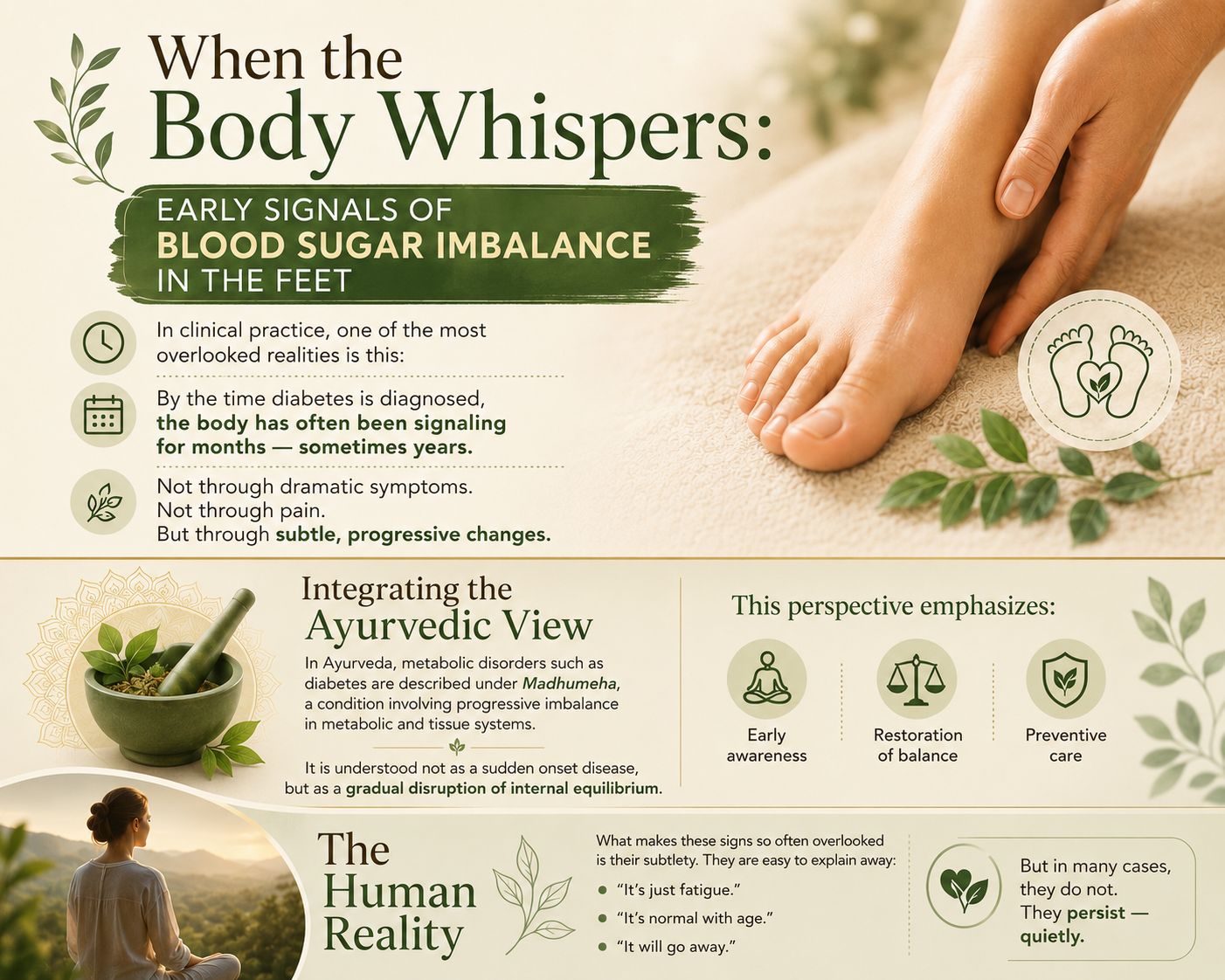
In clinical practice, one of the most overlooked realities is this:
By the time diabetes is diagnosed, the body has often been signaling for months — sometimes years. Not through dramatic symptoms. Not through pain. But through subtle, progressive changes. And very often… those changes begin in the feet.

A Clinical Perspective
Diabetes is not an abrupt condition. It develops gradually, as sustained elevations in blood glucose begin to affect multiple systems in the body.
The earliest structures impacted are typically:
- Peripheral nerves
- Microvascular circulation
- Skin integrity and tissue repair
Because the feet are the most distal part of the body, they are particularly vulnerable to these early changes. In many cases, they become the first visible indicator of internal imbalance. Early Clinical Indicators Observed in the Feet
- Altered Sensation (Peripheral Neuropathy)
Patients often report intermittent tingling, numbness, or a “pins and needles” sensation.
From a medical standpoint, this reflects early peripheral neuropathy, where prolonged exposure to elevated glucose begins to impair nerve function. From an Ayurvedic perspective, this aligns with Vata disturbance, affecting sensory transmission and nerve stability.
- Burning Sensation, Particularly at Night
A burning feeling in the soles of the feet — especially in the absence of external heat — is another early sign.
This occurs due to nerve signal dysregulation, where damaged nerve fibers transmit inaccurate sensory information to the brain. Clinically, this is a hallmark of progressing neuropathy.
- Delayed Wound Healing
Minor cuts, abrasions, or fissures that do not heal within a typical timeframe should be evaluated carefully.
Elevated blood glucose impairs:
- Microcirculation
- Immune response
- Tissue regeneration
This creates an environment where even minor skin injuries may persist longer than expected.
- Skin Discoloration and Texture Changes
Changes in skin tone — particularly darkening, redness, or a dusky appearance around the ankles — may indicate compromised circulation. Reduced oxygen delivery to tissues leads to visible changes in skin health, often accompanied by thinning or fragility.
- Persistent Dryness and Cracking
When the autonomic nerves regulating sweat and moisture are affected, the skin loses its natural hydration.
This results in:
- Chronic dryness
- Heel fissures
- Increased susceptibility to infection
In Ayurvedic terms, this reflects a deeper depletion of tissue nourishment (Dhatu imbalance) combined with Vata aggravation.
Integrating the Ayurvedic View
In Ayurveda, metabolic disorders such as diabetes are described under Madhumeha, a condition involving progressive imbalance in metabolic and tissue systems. It is understood not as a sudden onset disease, but as a gradual disruption of internal equilibrium.
This perspective emphasizes:
- Early awareness
- Restoration of balance
- Preventive care
The Human Reality What makes these signs so often overlooked is their subtlety.
They are easy to explain away:
- “It’s just fatigue.”
- “It’s normal with age.”
- “It will go away.”
But in many cases, they do not. They persist quietly. A More Refined Understanding of Health Health does not deteriorate overnight. It shifts gradually, often beneath conscious awareness. The body does not fail suddenly, It communicates, adjusts, and signals. The question is not whether those signals exist.
- It is whether we recognize them in time.
Final Reflection
In both modern medicine and Ayurveda, one principle remains consistent: Early recognition changes outcomes.
The feet, often neglected in daily observation, can provide valuable insight into internal health. Sometimes, what appears minor… is the beginning of something significant.