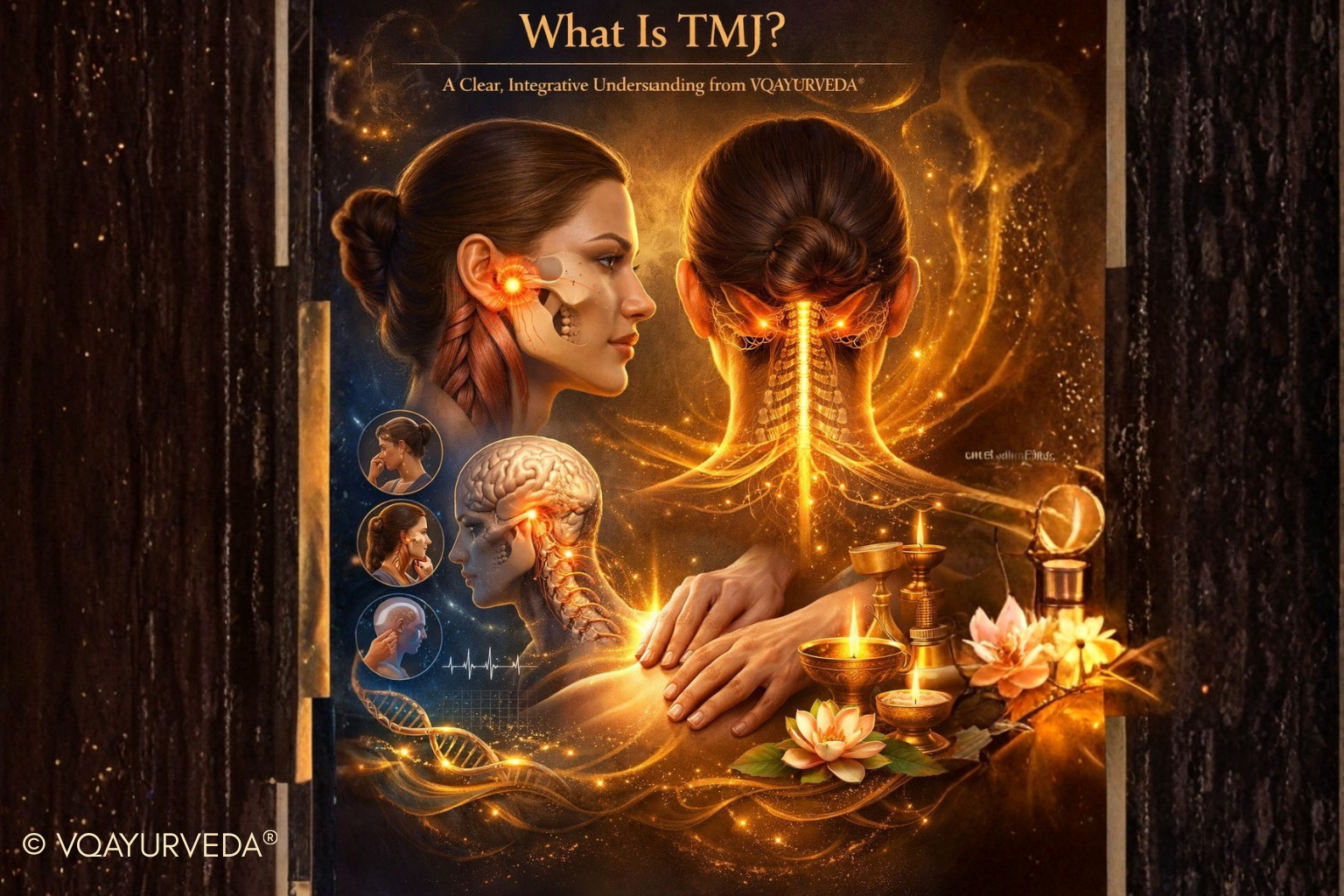
The temporomandibular joint (TMJ) is the hinge joint connecting the lower jaw to the skull. It enables chewing, speaking, yawning, and facial expression. When the joint, its disc, or surrounding muscles become strained or irritated, symptoms such as jaw pain, clicking, facial tension, and headaches may appear.
In modern healthcare, discomfort around the jaw, ears, face, or even the base of the skull is frequently labeled as “TMJ.” While true TMJ disorders exist, this diagnosis is often applied too broadly—especially when jaw-focused treatments fail to produce lasting change.
This is where a deeper understanding becomes essential.
The Missing Link: The Nervous System
From a VQAYURVEDA® and Ayurvedic perspective, pain is not viewed as an isolated joint or muscle problem. The body functions as a coordinated system, governed by the nervous system and the flow of Prana—the vital intelligence that organizes movement, sensation, and adaptation.
Pain felt at the base of the skull, particularly at the junction of the head and neck, is frequently misunderstood. In many cases, the jaw itself is not the primary source. Instead, the issue lies in chronic nervous system tension, shaped by modern lifestyle factors such as:
• Prolonged screen use
• Forward-head posture
• Sustained sitting
• Emotional stress
• Inadequate rest
These factors gradually disturb Vata dosha, which governs nerve function, communication, and movement throughout the body.
When Vata is dysregulated, tension accumulates where mobility and stability meet—most notably at the upper cervical region.
The Science Behind This
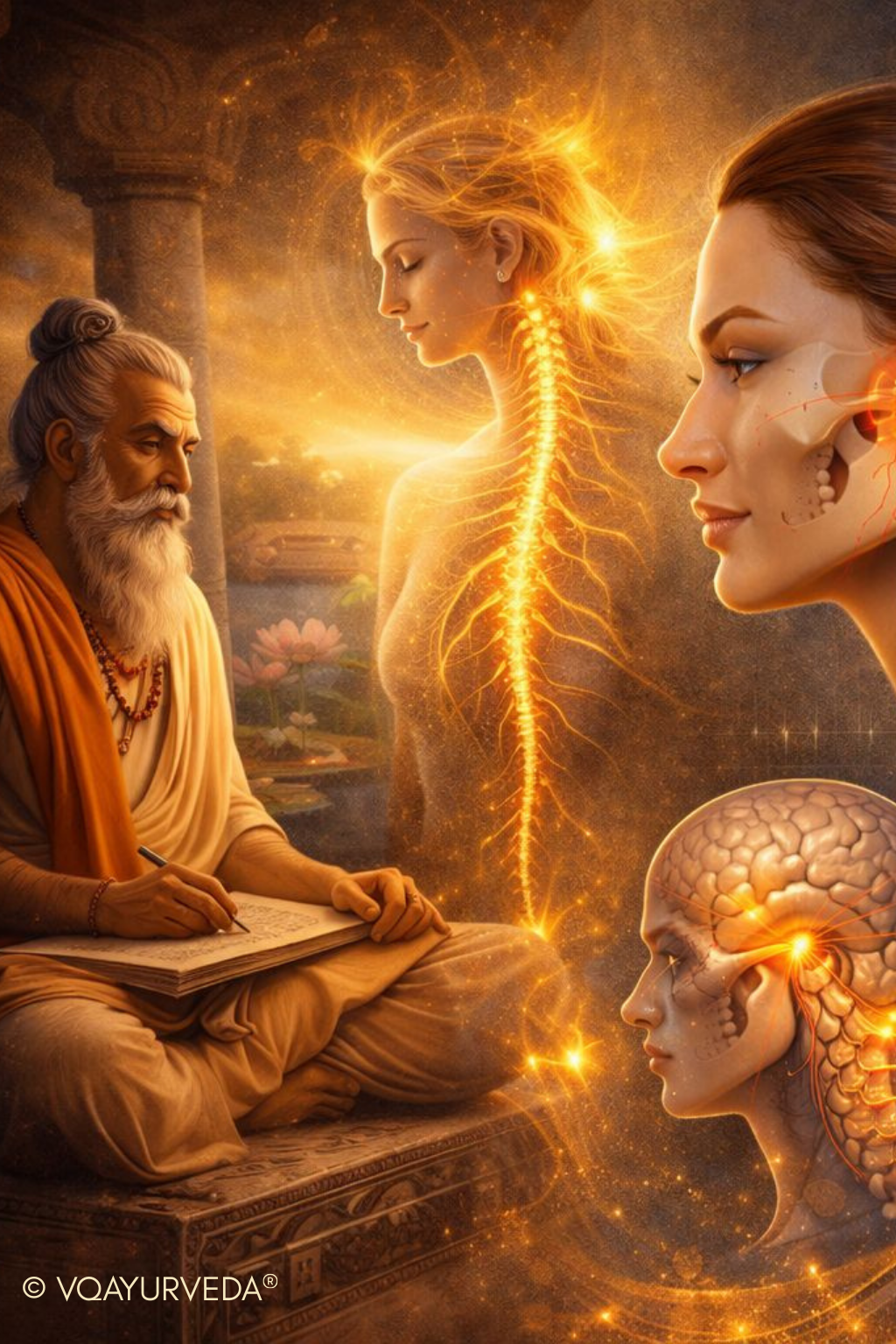
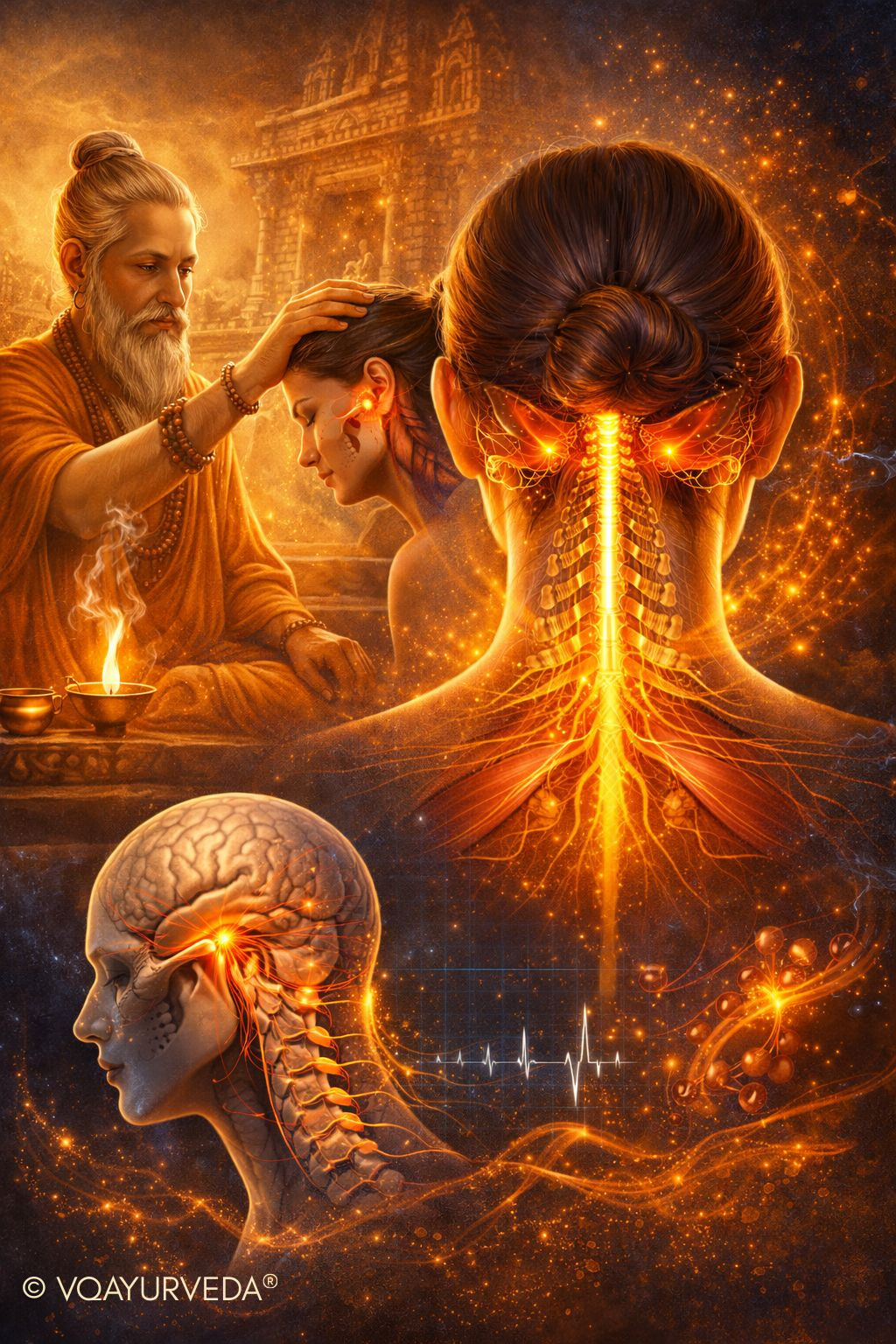
At the base of the skull is a group of small yet highly influential muscles called the suboccipital muscles. These muscles are neurologically dense and play a key role in:
• Head and neck positioning
• Eye–head coordination
• Sensory feedback between the brain and body
Passing through and around this region are the occipital nerves, which supply sensation to the back of the head and scalp.
Under sustained postural strain and stress, these muscles may remain in a state of chronic low-grade contraction. Over time, this leads to:
• Reduced blood flow
• Decreased tissue elasticity
• Increased nerve sensitivity
• Persistent activation of the stress response
The result is often described as:
• Constant pressure at the base of the skull
• Tenderness to touch
• Head heaviness
• Headaches unresponsive to jaw-based treatment
Because jaw and neck structures share overlapping nerve pathways, this pattern is frequently misinterpreted as TMJ-related—even when the jaw joint itself is functioning normally.
Why Jaw-Only Treatments Often Fail
Night guards, jaw exercises, and local interventions focus exclusively on the jaw. When the primary driver of symptoms is nervous system overload and cervical tension, these approaches cannot resolve the deeper imbalance.
From a physiological standpoint, this is not surprising.
The nervous system prioritizes protection. When it perceives threat—whether physical or emotional—it increases muscle tone and restricts movement as a survival response.
Why Force Is Not the Answer
Modern neuroscience confirms that the nervous system responds best to signals of safety, not force.
When aggressive pressure, pulling, or mechanical traction is applied:
• Muscles may tighten reflexively
• The body may guard
• Pain may increase before relief
This response is not dysfunction—it is intelligent protection.
True and lasting release occurs only when the nervous system no longer feels the need to defend.
Why Warmth, Oil, and Rhythm Work
(Science Meets Ayurveda)

Research on heat therapy, massage, and slow rhythmic touch shows that these methods:
• Activate the parasympathetic nervous system (rest-and-digest mode)
• Reduce stress hormones such as cortisol
• Improve local circulation
• Decrease nerve sensitivity
• Enhance proprioception (the body’s sense of position and coordination)
Ayurveda described these same principles thousands of years ago using different language:
• Warmth calms Vata
• Oil nourishes Majja Dhatu (nervous tissue)
• Rhythm stabilizes Prana
• Conscious touch restores communication between body and mind
When the nervous system feels supported, muscles release without force. Blood flow returns. Sensation normalizes. Movement becomes effortless rather than controlled.
Why People Feel Calmer—Not Just Pain-Free
This explains why people often report after Ayurvedic head-neck work:
• A quieter mind
• Easier breathing
• A lighter, more flexible body
• Deeper, more restorative sleep
Because this approach does not work only on muscles.
It works on nervous system regulation.
Science and Ayurveda: One Truth, Two Languages
Modern science is now confirming what Ayurveda has always understood:
👉 The body does not heal under threat.
👉 Healing begins when the nervous system feels safe.
This is why VQAYURVEDA® emphasizes:
• Soothing before correcting
• Nourishing before releasing
• Calming before mobilizing
This is not alternative care.
It is foundational human physiology—expressed through Ayurvedic wisdom.
That is the heart of the VQAYURVEDA® approach 🌿
VQAYURVEDA® – Client FAQ
Head, Neck & Jaw Tension (TMJ-Like Symptoms)
What is TMJ?
TMJ refers to the temporomandibular joint, the joint that connects the lower jaw to the skull. It helps with chewing, speaking, yawning, and facial expression. When the joint or surrounding muscles become strained or irritated, people may feel jaw tightness, clicking, facial discomfort, or headaches.
Why am I being told I have TMJ, but treatments aren’t helping?
TMJ is often used as a general label for pain around the jaw, ears, or head. However, many symptoms overlap with neck tension and nervous system stress, especially at the base of the skull. If jaw-focused treatments like night guards or exercises don’t bring relief, the root cause may lie elsewhere.
Why do I feel pressure or tenderness at the base of my skull?
This area is home to small stabilizing muscles and important nerves that connect the brain to the body. Modern lifestyle factors such as:
• Prolonged screen use
• Forward-head posture
• Stress and mental fatigue
• Poor sleep
can cause these muscles to stay tense for long periods. Over time, this tension may create a constant feeling of pressure, heaviness, or sensitivity.
Is this a jaw problem or a nervous system issue?
Often, it is both interconnected, but the nervous system plays a central role. The jaw, neck, head, and nervous system communicate constantly. When the nervous system is overstimulated or fatigued, muscles may tighten as a protective response — even if the jaw joint itself is healthy.
Why doesn’t forceful treatment always work?
The nervous system is designed to protect the body. Strong pressure, pulling, or mechanical force can sometimes cause the body to guard before it relaxes. Relief that comes only after discomfort may indicate that the system was challenged rather than soothed.
How does VQAYURVEDA® approach this differently?
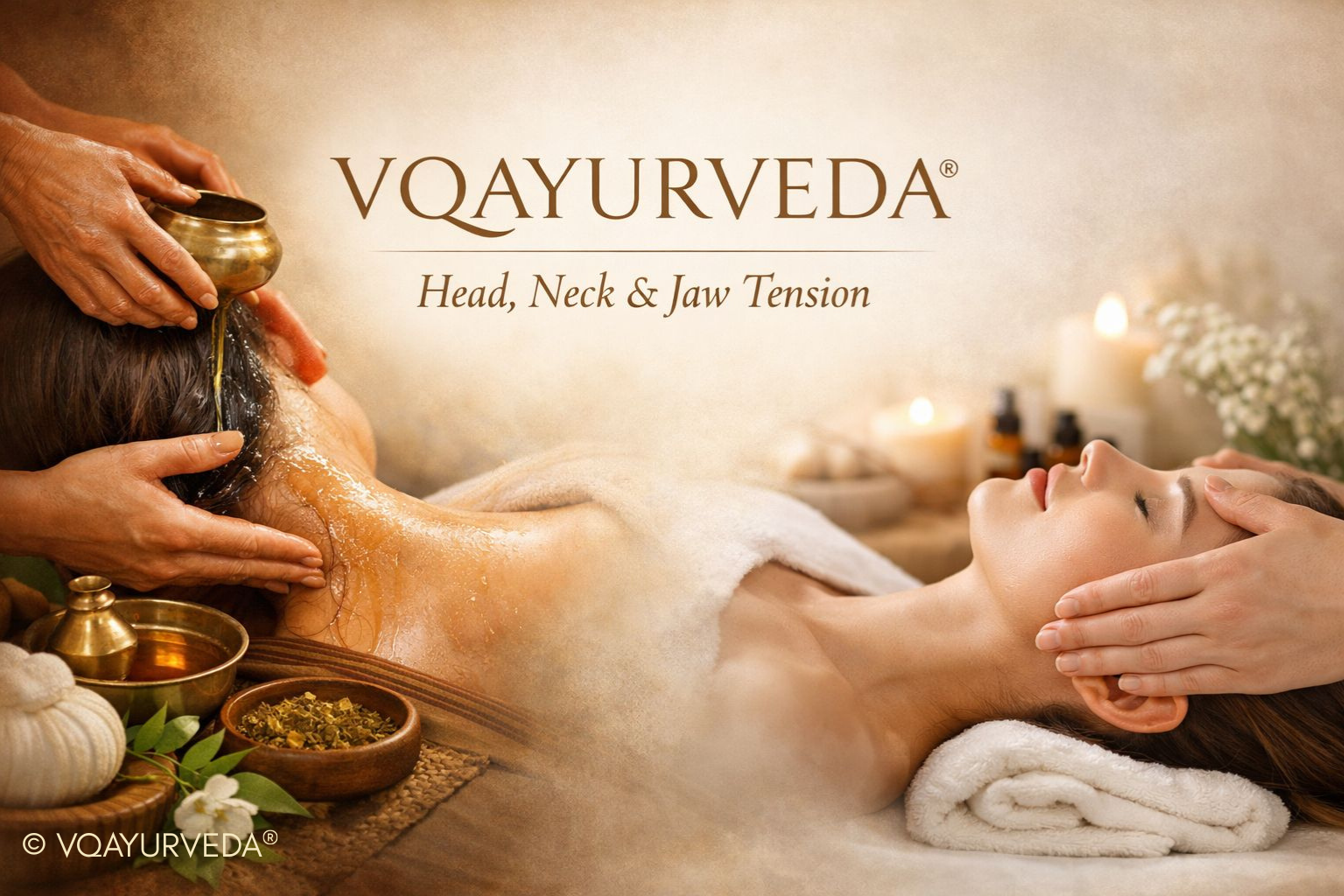
VQAYURVEDA® focuses on nervous system calming first. The approach is gentle and supportive, using:
• Warmth
• Herbal oils
• Slow, rhythmic massage
• Rest and integration
These methods signal safety to the body, allowing muscles to soften naturally rather than being forced to release.
Why Are Herbal Oils and Herbal Pastes Used?
Herbal oils and pastes are used in Ayurveda to nourish and calm the nervous system, helping the body release tension and move out of stress.
Warm herbal applications with gentle touch support circulation, reduce muscle guarding, calm overstimulated nerves, and promote both physical ease and mental calm.
What do people usually feel after a session?
Many people report:
• A lighter feeling in the head and neck
• Improved ease of movement
• Reduced pressure or tension
• A calmer mind
• Better sleep
These changes reflect nervous system regulation, not just muscle relaxation.
Is this a medical treatment?
No. VQAYURVEDA® offers Ayurvedic wellness care designed to support balance, relaxation, and nervous system health. It does not diagnose or treat medical conditions and does not replace medical care when needed.
Who may benefit from this approach?
People who experience:
• Head, neck, or jaw tension
• Stress-related discomfort
• Screen-related posture strain
• Difficulty relaxing or sleeping
often find this gentle approach supportive.
What is the philosophy behind this work?
Healing does not begin with force.
It begins when the body feels safe enough to let go.
That is the heart of the VQAYURVEDA® approach 🌿