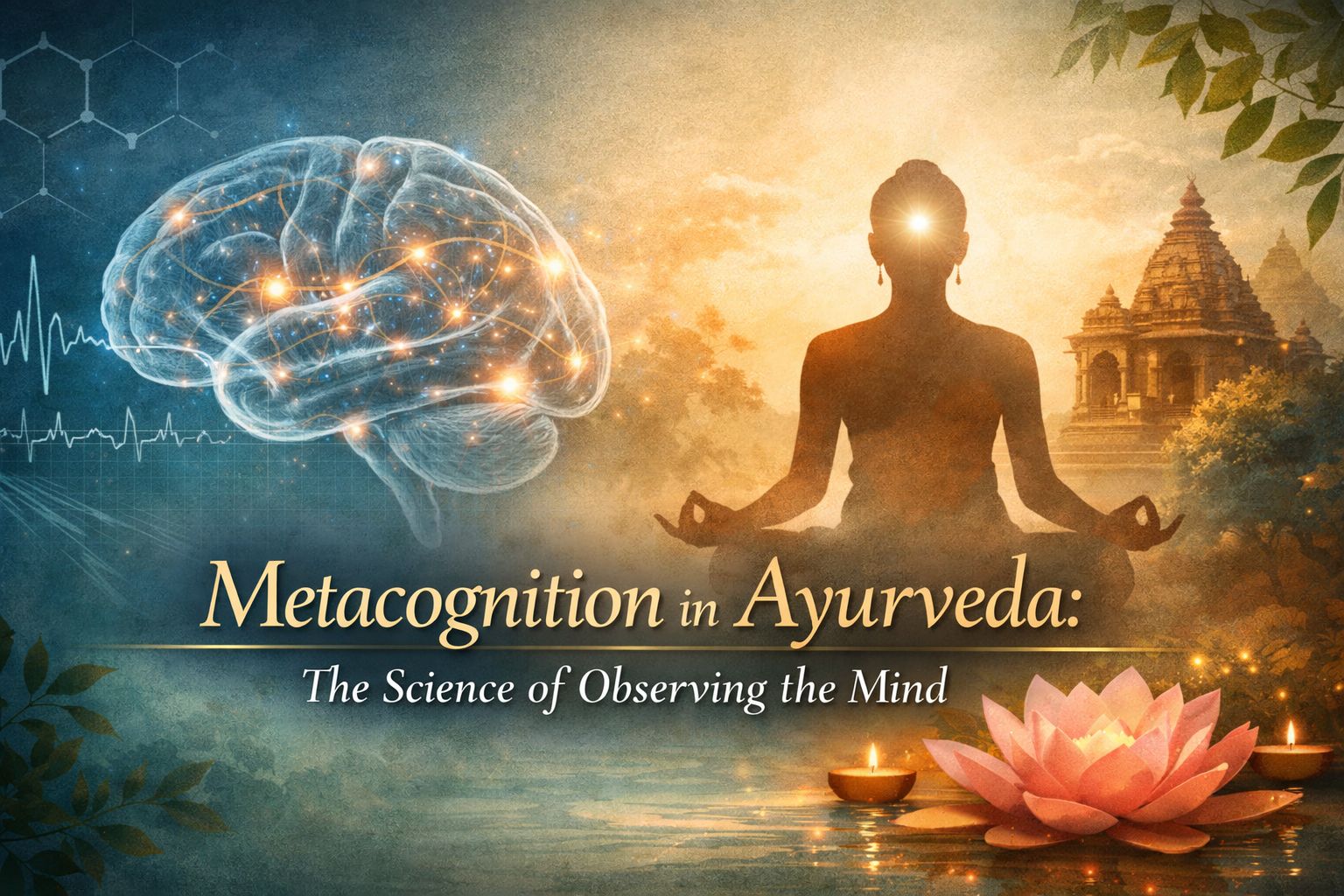
Modern health discussions often focus on isolated symptoms: digestive discomfort, insomnia, hormonal irregularities, chronic fatigue, anxiety, or inflammatory conditions. These issues are typically treated as separate disorders requiring separate solutions. However, both classical Ayurvedic wisdom and modern neurophysiology suggest a deeper truth: many chronic imbalances influenced by dysregulation of the nervous system.
In Ayurveda, the nervous system is not described using modern anatomical terminology, yet its functional equivalent is clearly understood through the concept of Vata dosha. Vata governs movement, communication, sensory perception, and neurological activity within the body. It regulates breath, circulation, elimination, mental processing, and muscular coordination. When Vata is balanced, the body operates with rhythm, clarity, and adaptability. When aggravated, instability and irregularity begin to manifest across multiple systems.
From a modern physiological perspective, chronic stress activates the sympathetic branch of the autonomic nervous system. When this activation becomes prolonged, the body remains in a state of hypervigilance. Cortisol levels fluctuate, digestion weakens, sleep becomes fragmented, and inflammatory pathways may become heightened. Over time, this state of internal tension disrupts endocrine balance, immune resilience, and metabolic efficiency.
Ayurveda recognized this pattern thousands of years ago, describing it as a progressive disturbance of Vata. The early signs are subtle: dryness, restlessness, irregular appetite, bloating, light sleep, increased sensitivity to noise or stimulation. If left unaddressed, these disturbances deepen, affecting tissues (dhatus), mental stability, and overall vitality (ojas).
The critical insight is this: the body cannot heal effectively when the nervous system remains in a state of chronic alertness. True restoration requires regulation before correction. Without calming the underlying neurological agitation, treatments directed only at symptoms may provide temporary relief but rarely produce lasting stability.
In clinical Ayurvedic practice, therapies that regulate Vata serve as foundational interventions. Warm herbal oils, rhythmic massage techniques, grounding dietary patterns, breath regulation, and structured daily routines all serve to signal safety to the nervous system. This shift from sympathetic dominance toward parasympathetic regulation allows digestion to strengthen, hormones to recalibrate, sleep to deepen, and tissues to rebuild.
The goal is not suppression of symptoms, but restoration of internal coherence.
Understanding chronic imbalance through the lens of nervous system regulation reframes healing entirely. Rather than asking, “Which symptom should I treat?” we begin asking, “Is the body in a regulated state that allows healing to occur?”
In this perspective, the nervous system is not simply one system among many. It is the conductor of the physiological orchestra.

The VQAYURVEDA® Approach to Nervous System Regulation
Within my clinical work in Ayurvedic therapy, I developed a structured nervous system relaxation method designed to address chronic Vata aggravation at its root. This technique integrates classical Ayurvedic oil therapy principles with modern anatomical understanding of the neuromuscular system.
The method focuses specifically on areas of high neurological density and stress retention, including the scalp, cervical spine, acromial–scapular region, diaphragm, sacral base, and plantar nerve pathways. These anatomical regions correspond to key energetic and neurological junctions where sympathetic overactivity often accumulates.
Unlike general relaxation massage, this approach emphasizes:
• Slow, rhythmically consistent effleurage strokes
• Warm, Vata-pacifying herbal oils selected according to constitution
• Sustained pressure transitions that stimulate parasympathetic activation
• Breath-synchronized application to entrain nervous system rhythm
The therapeutic objective is not muscular manipulation alone, but neurological signaling. Repetition, warmth, and rhythmic continuity communicate safety to the autonomic nervous system. When safety is perceived, defensive tone decreases. Circulation improves. Digestive function stabilizes. Sleep architecture deepens. Hormonal signaling becomes more coherent.
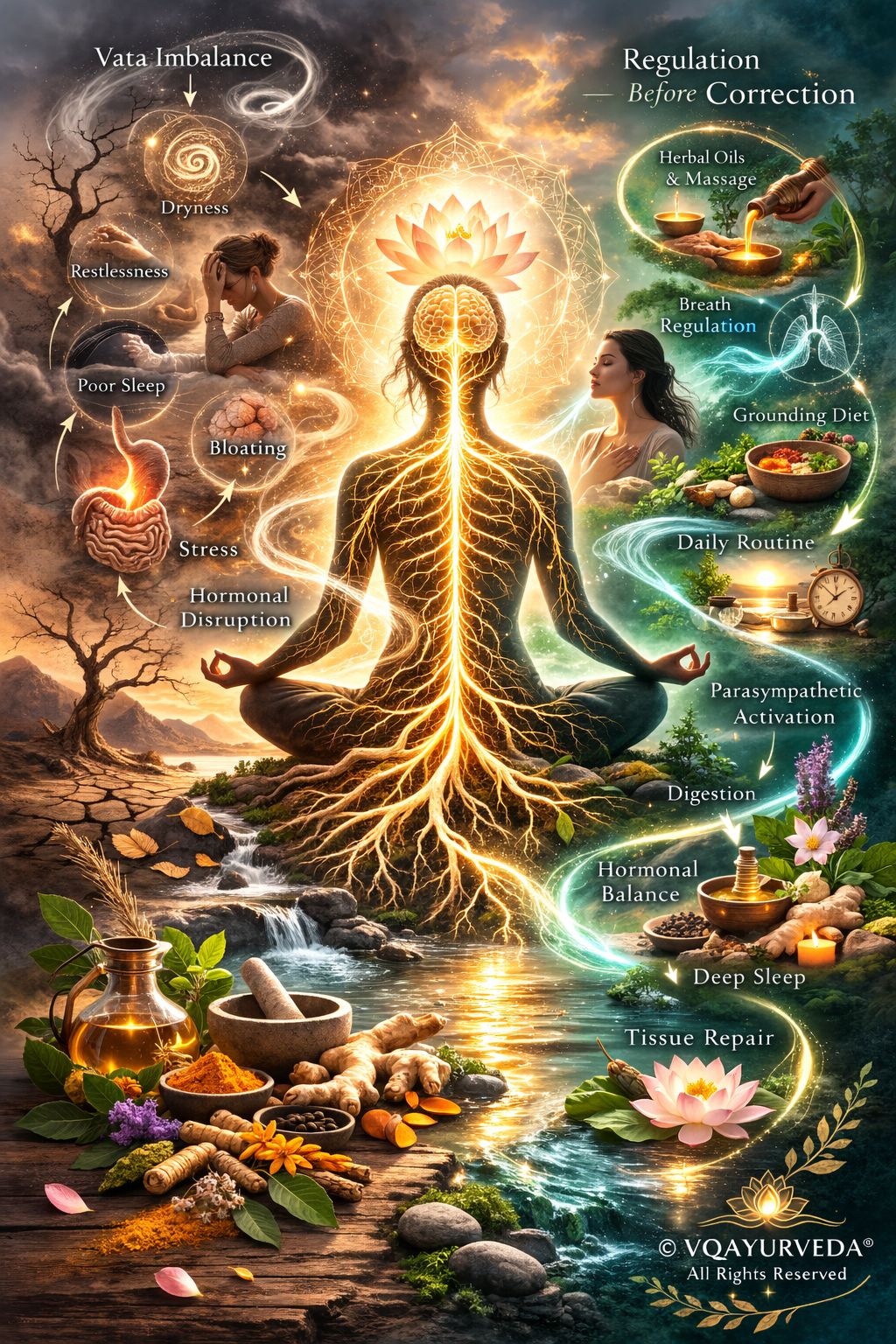
In many cases, patients initially seeking relief for digestive irregularity, insomnia, anxiety, menstrual imbalance, or chronic tension experience improvement once nervous system regulation is restored.
This confirms a foundational Ayurvedic principle: when Vata stabilizes, the body regains its capacity for self-correction.