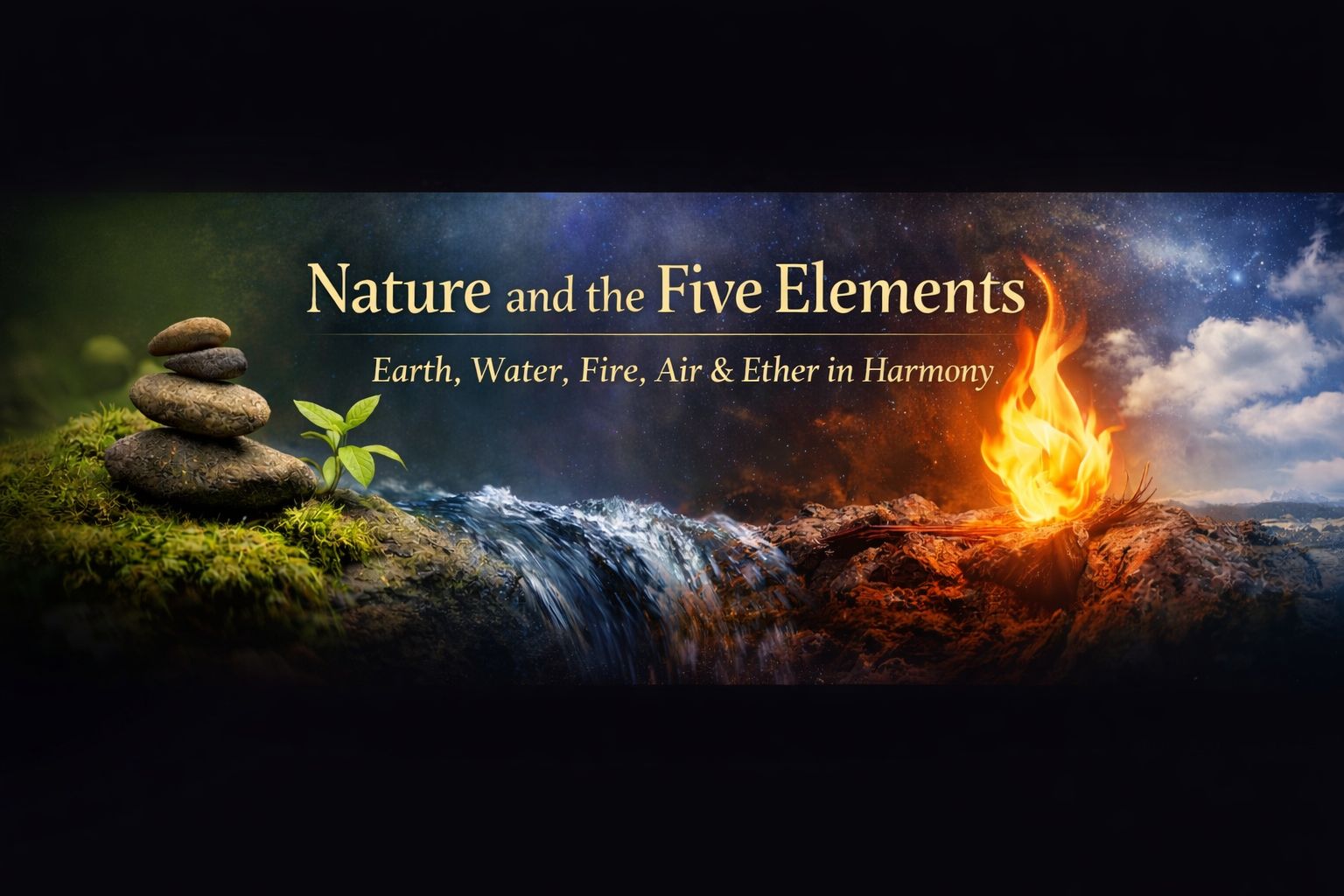
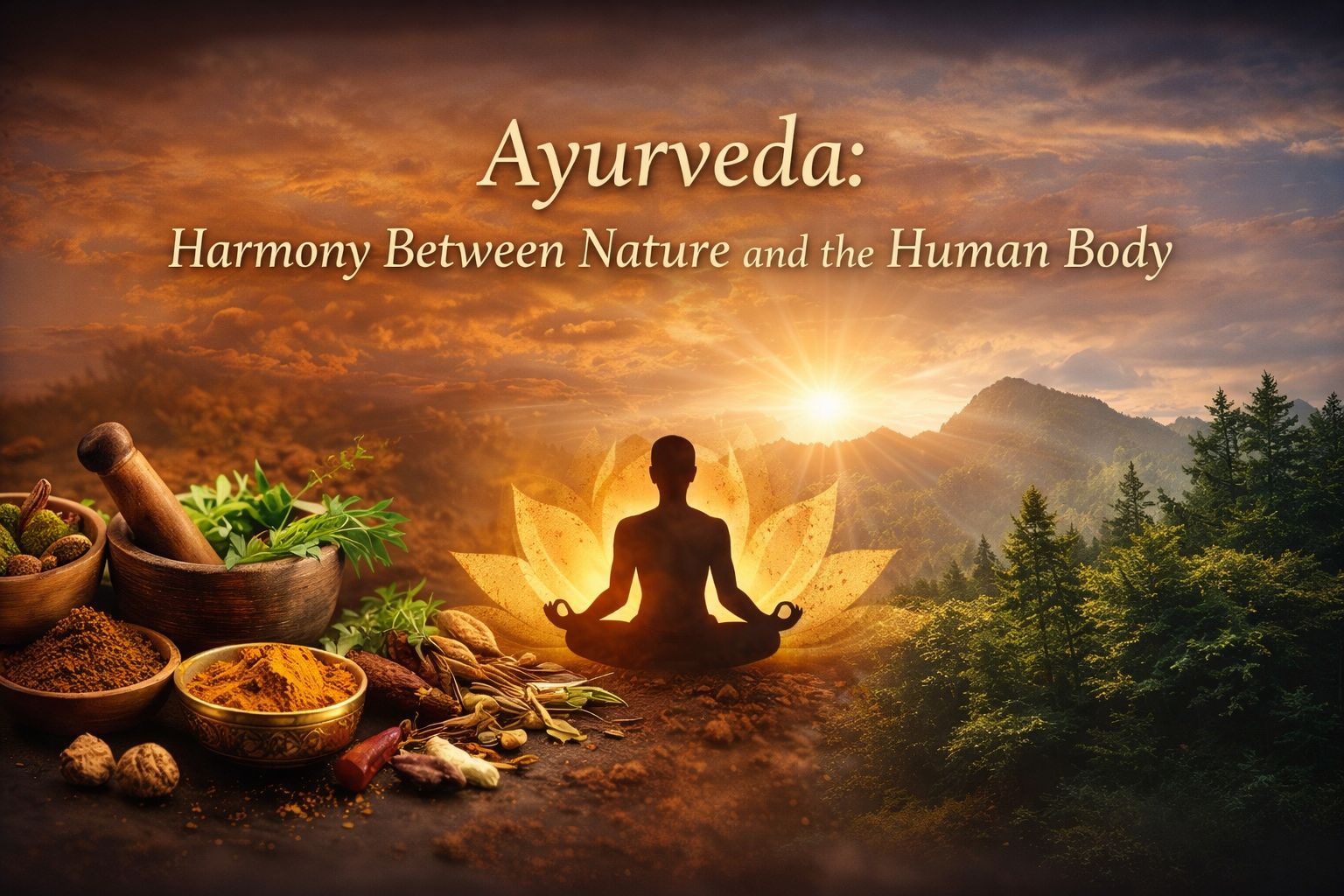
In Ayurvedic philosophy, all forms of life arise from the interaction of five fundamental elements: earth, water, fire, air, and ether. These elements are not merely symbolic ideas but natural principles that shape both the environment and the human body. By observing the patterns of nature, Ayurveda reveals that health, growth, and transformation depend on the balance and cooperation of these elemental forces. Understanding this relationship allows us to see that human existence is deeply interconnected with the natural world.
“The same elements that form mountains, rivers, and forests also form the human body. Understanding this connection is one of the central insights of Ayurveda.”
— Maria, Founder of VQAYURVEDA®
The Presence of the Five Elements in Nature
Ayurveda teaches that every living system is composed of the five elements. These elements exist not only within the human body but also throughout the natural environment.
The earth element provides structure and stability. It forms the soil, mountains, minerals, and the physical foundation that supports life.
The water element brings fluidity and nourishment. Water allows nutrients to move through plants and living organisms, supporting growth and vitality.
The fire element represents transformation and energy. In nature, sunlight provides the energy that allows plants to grow and sustain ecosystems.
The air element governs movement and exchange. Air supports respiration and the circulation of vital gases necessary for life.
The ether element represents space. It is the field within which all other elements exist, allowing growth, expansion, and communication between systems.
Together, these five elements cooperate continuously to support life in the natural world.
Transformation in the Natural World
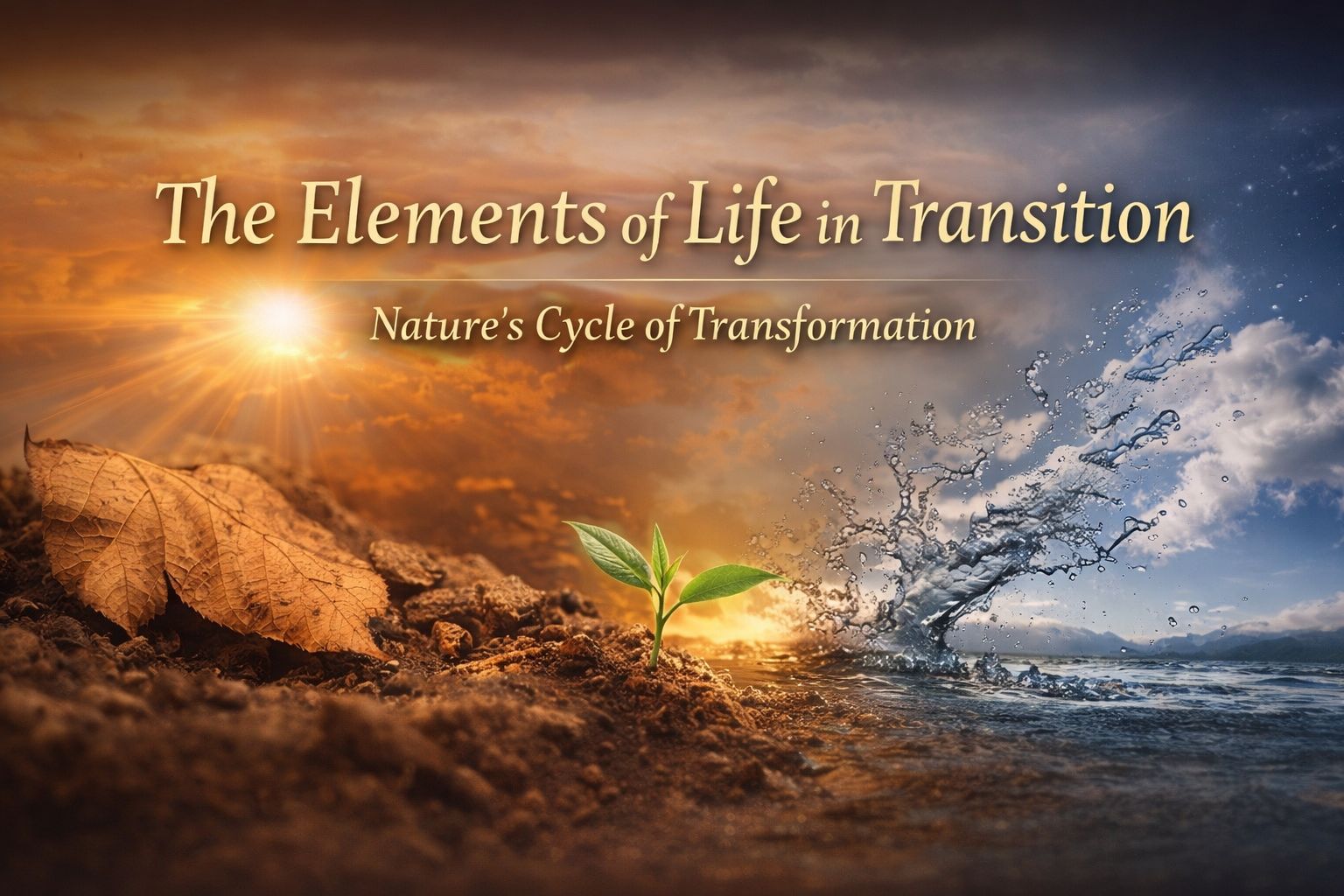
Nature functions through constant transformation rather than permanent stability. Everything moves through cycles of change.
A seed grows into a plant. The plant develops leaves, flowers, and fruit. Over time, the plant returns to the soil, where its nutrients nourish future growth.
Throughout this process, the elements themselves do not disappear. Instead, they transform and continue participating in the cycles of life.
Water evaporates and returns as rain. Minerals circulate through soil and living organisms. Sunlight fuels growth and transformation. Air moves through ecosystems, supporting respiration and life.
These natural cycles demonstrate the continuous movement and renewal of the elements.
The Human Body and the Elements
According to Ayurveda, the human body reflects the same elemental structure found in nature.
The earth element forms the body’s physical tissues and bones.
The water element maintains bodily fluids and circulation.
The fire element governs metabolism and digestion.
The air element regulates movement, including the nervous system and breathing.
The ether element creates the internal spaces that allow organs and tissues to function.
Because the body shares the same elemental foundation as the natural world, balance within the body is closely related to balance within the environment.
Ayurveda therefore emphasizes living in harmony with natural rhythms and maintaining equilibrium among the elements.
Awareness as a Path to Balance
Careful observation of nature encourages a deeper awareness of the relationships that sustain life. When we recognize how the five elements interact in the environment, we begin to understand their presence within ourselves.
This awareness promotes respect for natural systems and encourages choices that support balance and well-being.
In Ayurvedic philosophy, health is not achieved through isolation from nature but through alignment with the elemental forces that shape life.
A Reflection from Nature
Even the smallest elements of the natural world reveal the cooperation of the five elements. Soil, water, sunlight, air, and space continuously interact to create and sustain life.
Recognizing this interconnectedness reminds us that human health and environmental harmony are inseparable. The same forces that shape forests, rivers, and landscapes also shape the body and mind.
Understanding this relationship is one of the most profound insights preserved in the wisdom of Ayurveda.
Key Takeaways
- Ayurveda teaches that all life is composed of five fundamental elements: earth, water, fire, air, and ether.
- These elements exist both in nature and within the human body, forming the foundation of Ayurvedic understanding of health and balance.
- Natural systems operate through cycles of transformation, demonstrating the continuous interaction of these elements.
- Observing nature helps us understand how balance among the elements supports well-being.
- Living in harmony with the rhythms of nature is one of the central principles of Ayurvedic philosophy.
“When we observe nature carefully, we begin to see that the same elements shaping the earth also shape our bodies. Understanding this connection is at the heart of Ayurvedic wisdom.”
— Maria, Founder of VQAYURVEDA®
About VQAYURVEDA®
VQAYURVEDA® is dedicated to preserving and sharing the wisdom of traditional Ayurvedic knowledge through modern understanding. By combining classical Ayurvedic principles with contemporary insight into anatomy, physiology, and therapeutic practice, VQAYURVEDA® promotes natural balance, mindful living, and a deeper connection between human health and the natural world.
Through education, herbal knowledge, and therapeutic practices, VQAYURVEDA® seeks to make the timeless principles of Ayurveda accessible and meaningful in today’s world.
Maria — Founder of VQAYURVEDA®
www.saloncassiope.com
info@saloncassiope.com