

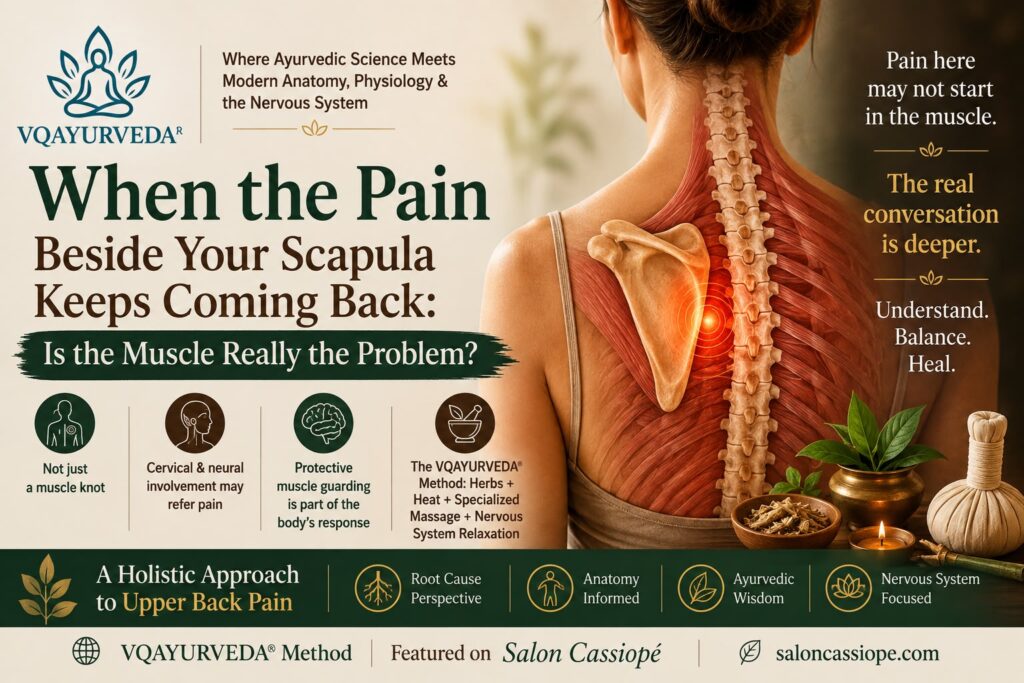
There is a particular kind of discomfort many people recognize immediately: a deep, stubborn point of tension between the medial border of the scapula and the spine.
You massage it. You stretch it. You press directly into the tight area. Perhaps it feels better for a while.
Then it returns.
We often call it a “muscle knot.”
But when that same pain repeatedly returns, especially when discomfort, tingling, numbness, or altered sensation also travels toward the shoulder or down the arm, there is a more interesting question to ask:
What if the muscle we keep treating is not always where the problem begins?
Pain Does Not Always Stay at Its Source
The cervical spine contains nerve roots that emerge from the spinal cord and contribute to the nerves supplying the shoulder and upper limb.
When a cervical nerve root becomes irritated, for example through inflammation, degenerative narrowing, disc-related changes, or other mechanisms, symptoms do not necessarily remain confined to the neck.
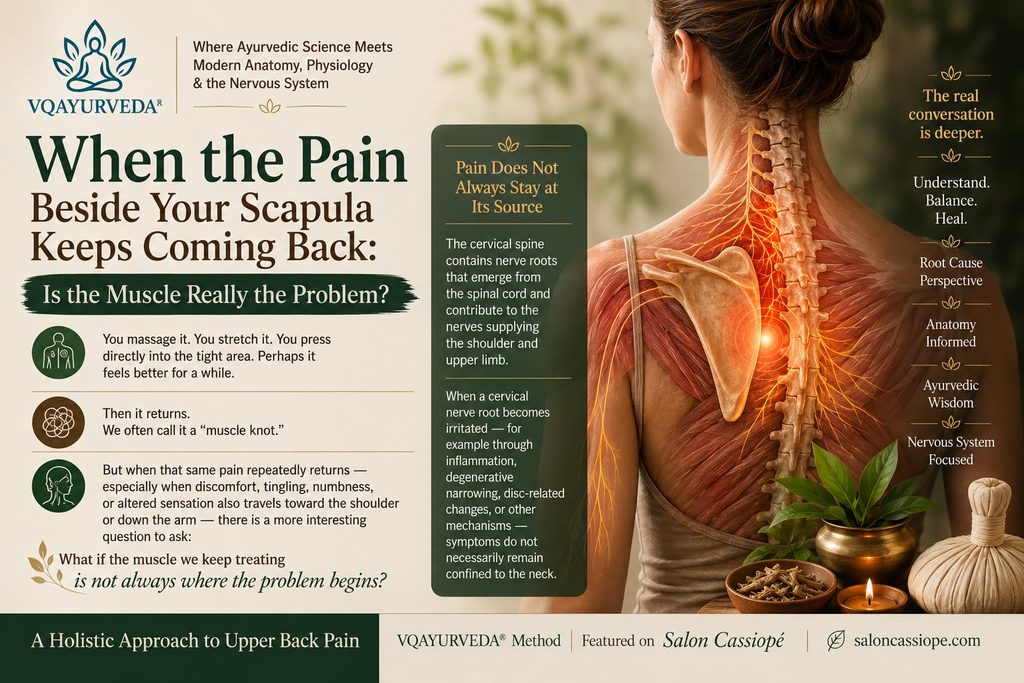
Pain can sometimes be perceived around the scapular region and may extend into the shoulder and arm. Depending on the neural structures involved, symptoms may also include tingling, numbness, altered sensation, or weakness.
This demonstrates an important principle of human physiology:
Where pain is felt is not necessarily where the entire physiological process begins.
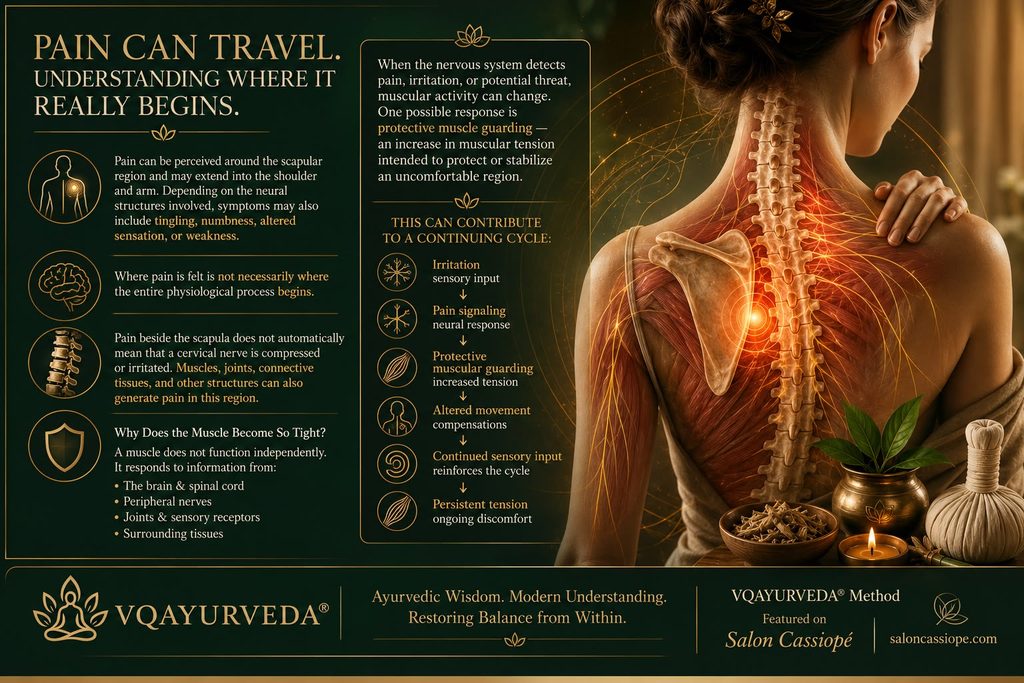
At the same time, pain beside the scapula does not automatically mean that a cervical nerve is compressed or irritated. Muscles, joints, connective tissues, and other structures can also generate pain in this region.
The body is more complex than a single “knot.”
When the nervous system detects pain, irritation, or potential threat, muscular activity can change. One possible response is protective muscle guarding, an increase in muscular tension intended to protect or stabilize an uncomfortable region.
This can contribute to a continuing cycle:
Irritation → pain signaling → protective muscular guarding → altered movement → continued sensory input → persistent tension
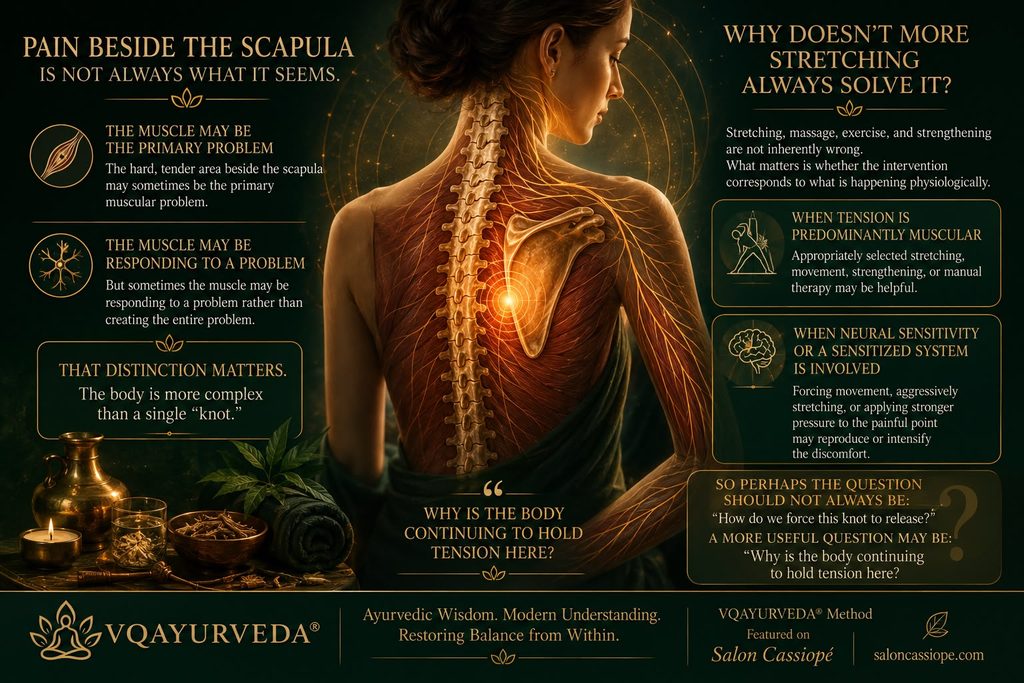
This means that the hard, tender area beside the scapula may sometimes be the primary muscular problem. But sometimes the muscle may be
responding to a problem rather than creating the entire problem.
That distinction matters.
Why Doesn’t More Stretching Always Solve It?
Stretching is not inherently wrong. Neither are massage, exercise, or strengthening.
What matters is whether the intervention corresponds to what is happening physiologically.
When tension is predominantly muscular, appropriately selected stretching, movement, strengthening, or manual therapy may be helpful.
But when neural sensitivity or a sensitized neuromuscular system contributes to the symptoms, repeatedly forcing movement, aggressively stretching, or continually applying stronger pressure to the painful point may sometimes reproduce or intensify the discomfort.
So perhaps the question should not always be:
How do we force this knot to release?
A more useful question may be:
Why is the body continuing to hold tension here?
The VQAYURVEDA® Perspective
This understanding is central to the VQAYURVEDA® Method, an approach I developed to bring Ayurvedic therapeutic principles together with an anatomy- and physiology-informed understanding of the body and nervous system.
The method does not look only at the painful point.
It considers the broader therapeutic environment surrounding the muscles, tissues, sensory system, and nervous system.
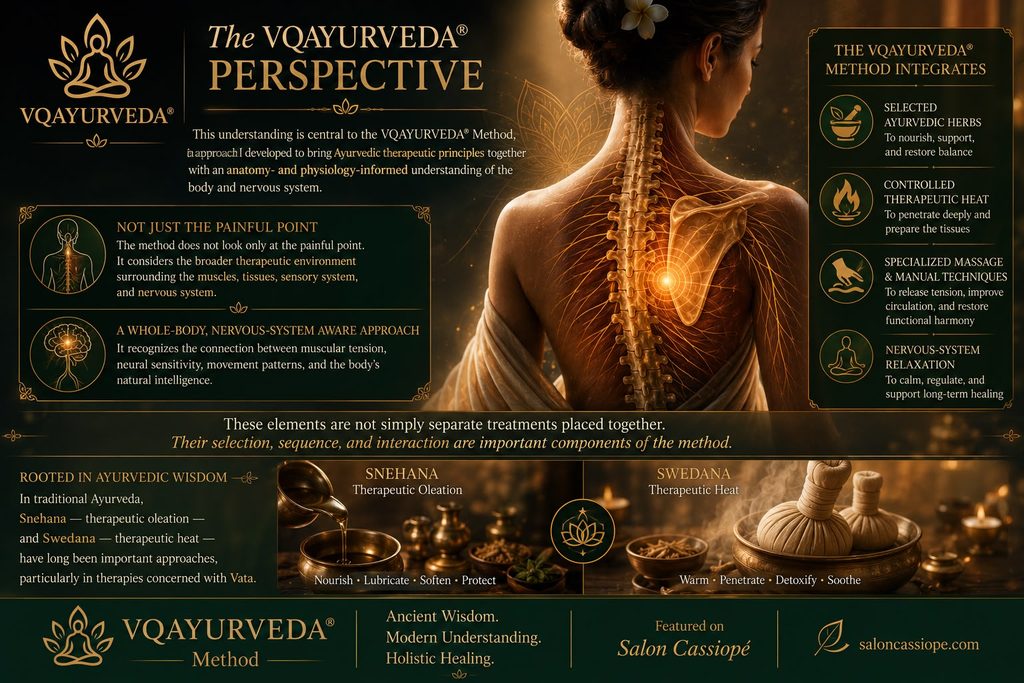
The VQAYURVEDA® Method integrates:
Selected Ayurvedic herbs + controlled therapeutic heat + specialized massage and manual techniques + nervous-system relaxation.
These elements are not simply separate treatments placed together. Their selection, sequence, and interaction are important components of the method.
In traditional Ayurveda, Snehana — therapeutic oleation — and Swedana — therapeutic heat — have long been important approaches, particularly in therapies concerned with Vata.
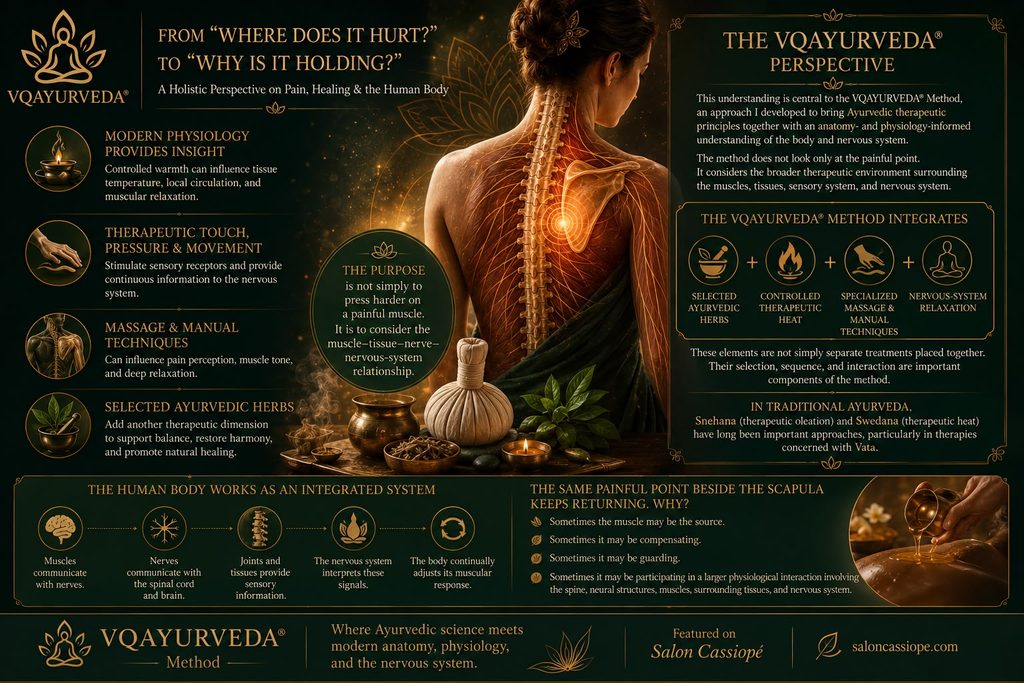
Modern physiology provides another perspective.
Controlled warmth can influence tissue temperature, local circulation, and muscular relaxation. Therapeutic touch, pressure, and movement stimulate sensory receptors and provide continuous information to the nervous system. Massage and manual techniques can influence pain perception, muscle tone, and relaxation.
Selected Ayurvedic herbs add another therapeutic dimension.
Within VQAYURVEDA®, I continue to research the physiological mechanisms through which carefully selected botanical preparations may interact with controlled heat and specialized manual techniques as part of this therapeutic environment.
The purpose is not simply to press harder on a painful muscle. It is to consider the muscle–tissue–nerve–nervous-system relationship surrounding the problem.
From “Where Does It Hurt?” to “Why Is It Holding?”
This is an important change in perspective.
The human body does not operate as a collection of isolated parts.
Muscles communicate with nerves. Nerves communicate with the spinal cord and brain. Joints and tissues provide sensory information. The nervous system interprets those signals, and the body continually adjusts its muscular response.
So when the same painful point beside the scapula keeps returning, looking only at the spot beneath your fingertips may not tell the whole story.
Sometimes the muscle may be the source. Sometimes it may be compensating. Sometimes it may be guarding. And sometimes it may be participating in a larger physiological interaction involving the
spine, neural structures, muscles, surrounding tissues, and nervous system. Understanding that interaction rather than simply fighting the painful spot is a fundamental principle of the VQAYURVEDA® Method.
VQAYURVEDA® Where Ayurvedic science meets modern anatomy, physiology, and the nervous system.