

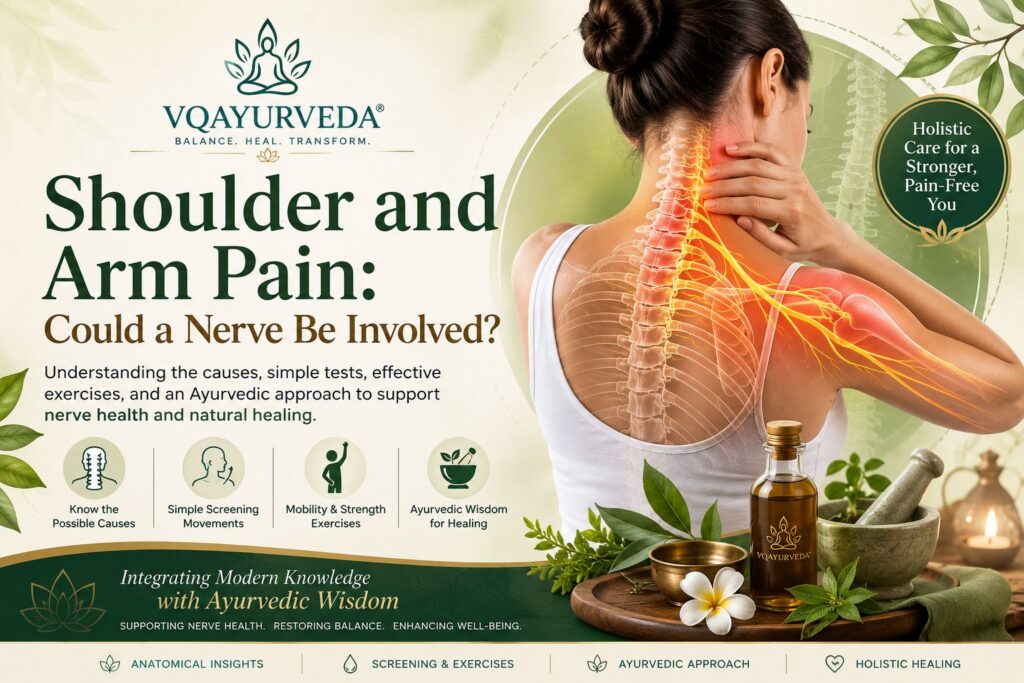
Pain, numbness, tingling, or weakness traveling from the neck into the shoulder, arm, or hand can be frustrating and sometimes alarming. While stretching may seem like the obvious solution, it is important to understand that not all shoulder and arm symptoms are caused by tight muscles alone. In some cases, a nerve may be irritated or compressed along its pathway.
If stretching increases your pain, numbness, or tingling, stop the activity and seek professional assessment. Before choosing the right treatment approach, it is important to identify where the nerve may be affected.
Two Common Sources of Nerve-Related Arm Symptoms
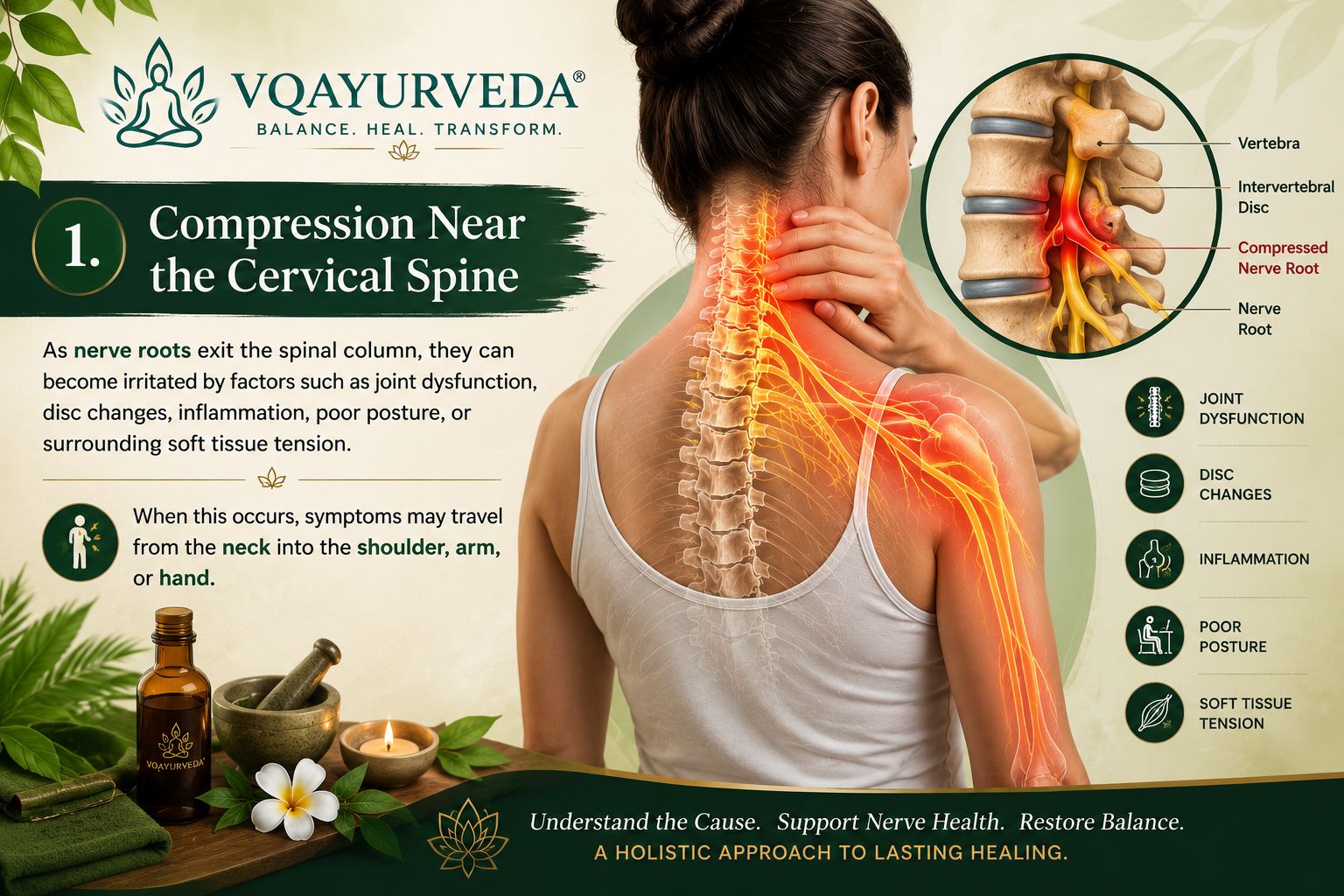
The nerves that travel into the shoulder and arm originate from the cervical spine (neck). Irritation can occur in two common locations.
- Compression Near the Cervical Spine
After leaving the neck, nerves travel through several anatomical spaces before reaching the arm. Areas that may contribute to nerve irritation include:
- The scalene muscles on the side of the neck
- The space beneath the clavicle (collarbone)
- The pectoralis minor region near the front of the shoulder
When nerves are compressed in any of these areas, symptoms such as pain, numbness, tingling, heaviness, or weakness may develop in the arm or hand.
- Simple Screening Movements
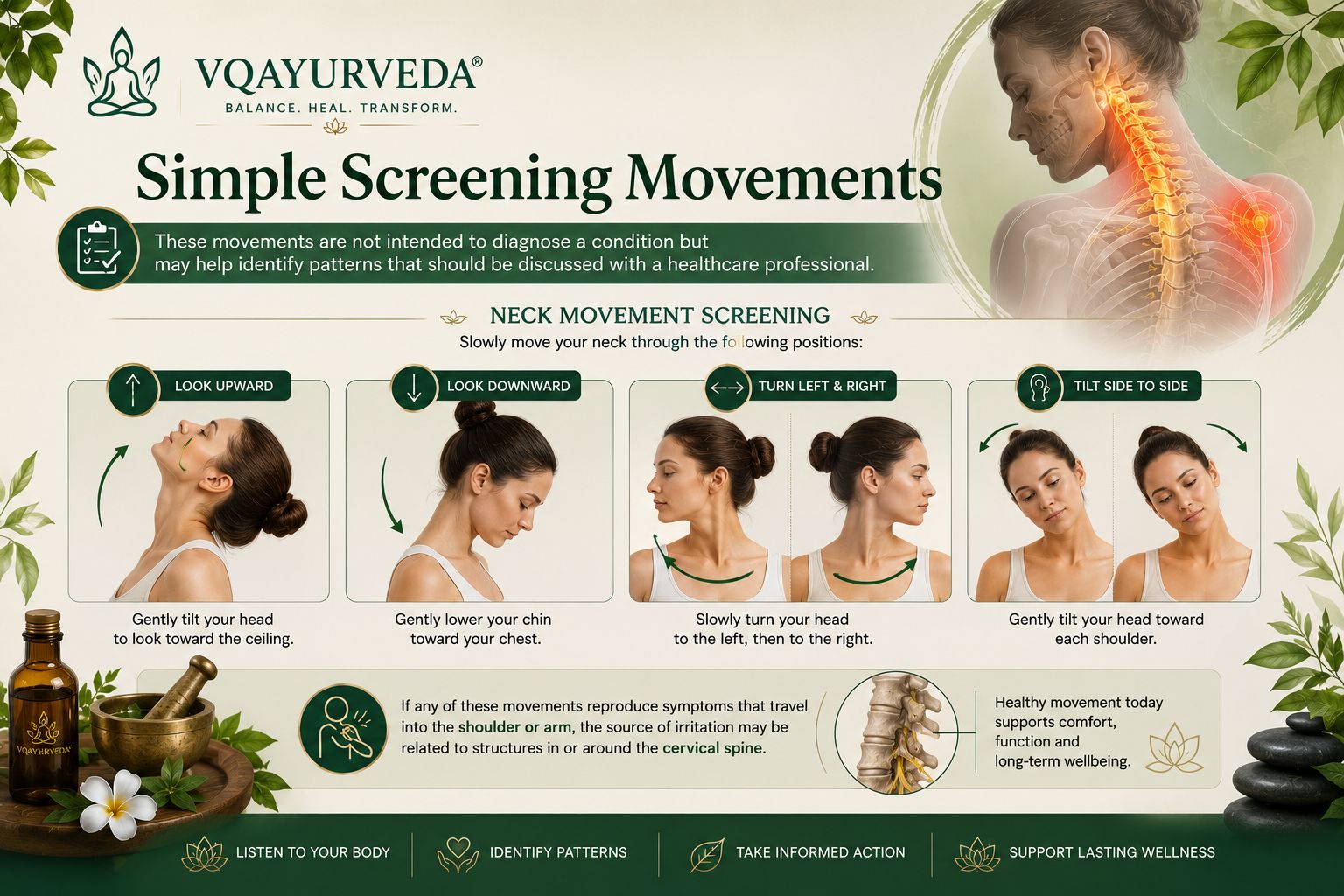
These movements are not intended to diagnose a condition but may help identify patterns that should be discussed with a healthcare professional.
- Neck Movement Screening
Slowly move your neck through the following positions:
- Look upward
- Look downward
- Turn your head left and right
- Gently tilt your head toward each shoulder
If any of these movements reproduce symptoms that travel into the shoulder or arm, the source of irritation may be related to structures in or around the cervical spine.
- Arm Position Screening
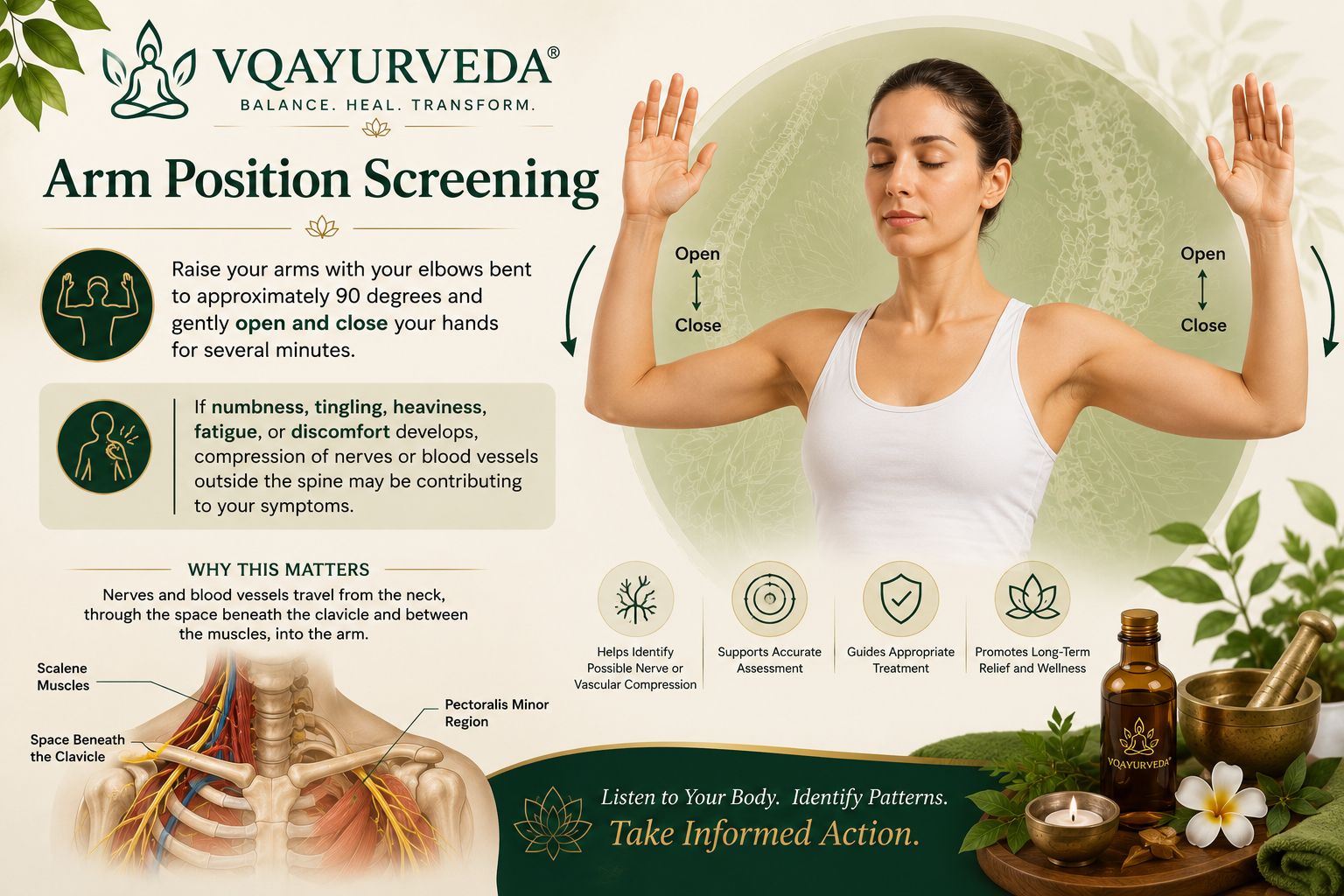
Raise your arms with your elbows bent to approximately 90 degrees and gently open and close your hands for several minutes.
If numbness, tingling, heaviness, fatigue, or discomfort develops, compression of nerves or blood vessels outside the spine may be contributing to your symptoms.
- Mobility Exercises
- For Neck-Related Irritation
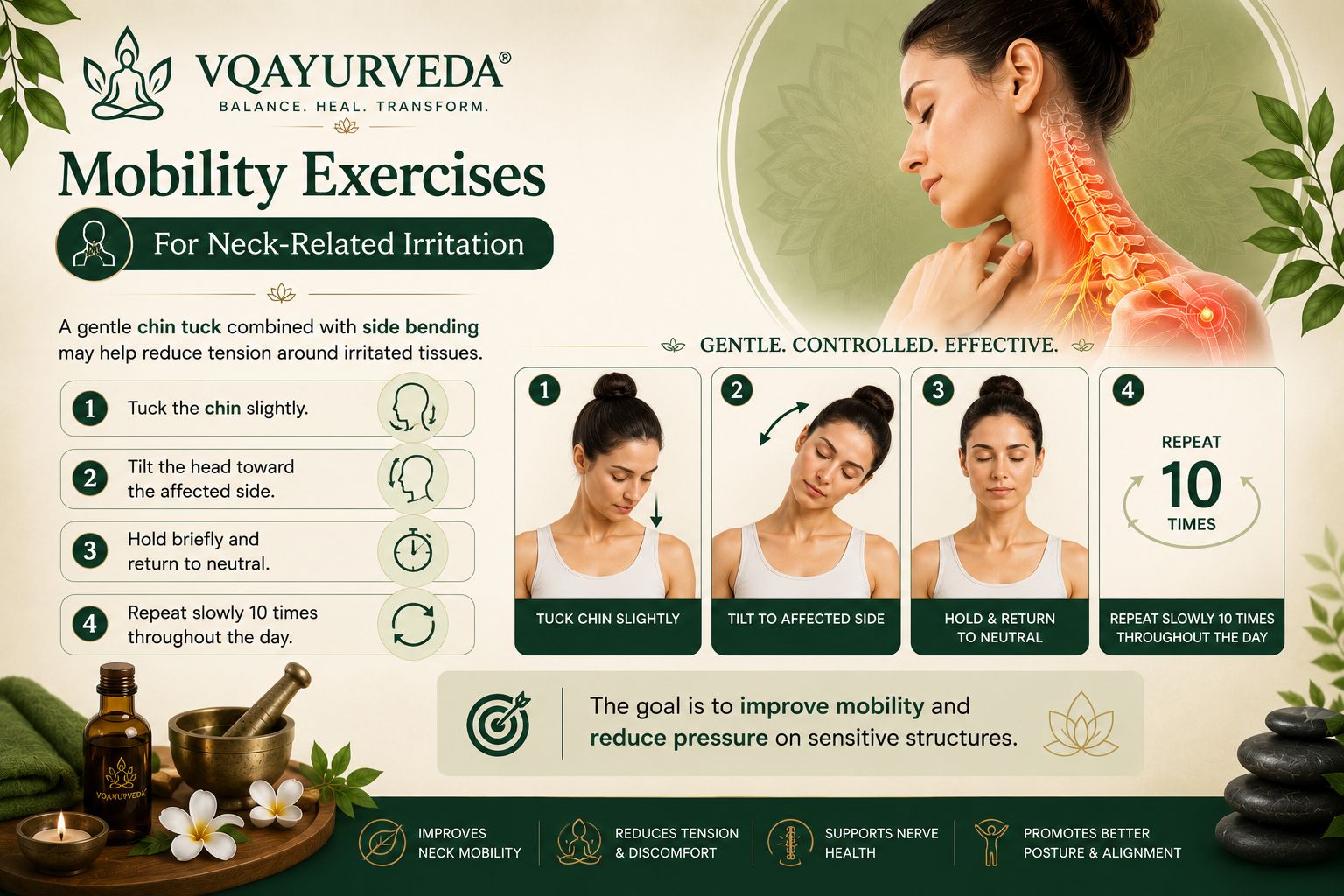
A gentle chin tuck combined with side bending may help reduce tension around irritated tissues.
- Tuck the chin slightly.
- Tilt the head toward the affected side.
- Hold briefly and return to neutral.
- Repeat slowly 10 times throughout the day.
The goal is to improve mobility and reduce pressure on sensitive structures.
- For Scalene Muscle Tightness
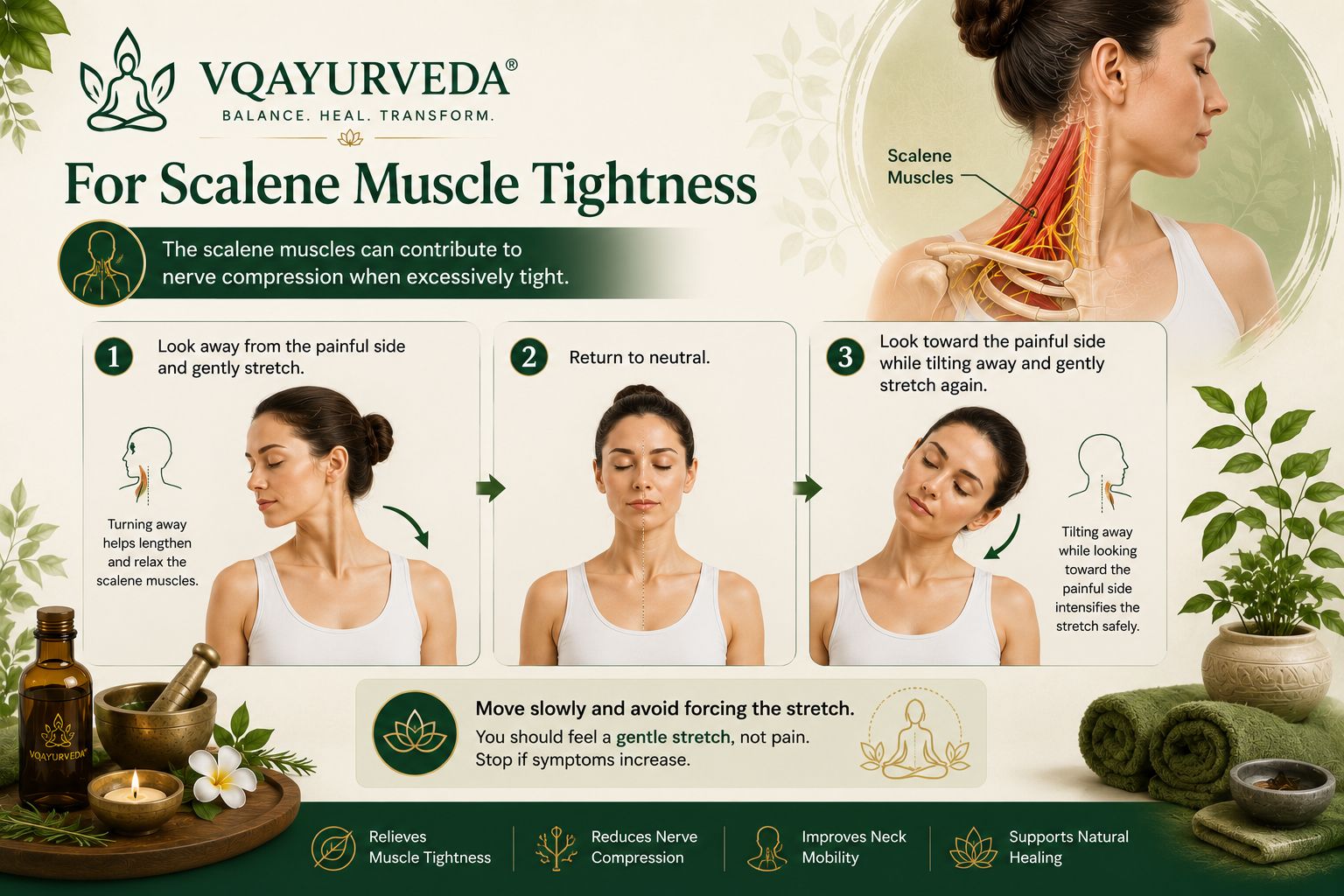
The scalene muscles can contribute to nerve compression when excessively tight.
- Look away from the painful side and gently stretch.
- Return to neutral.
- Look toward the painful side while tilting away and gently stretch again.
Move slowly and avoid forcing the stretch.
For Pectoralis Minor Tightness
Lying lengthwise on a foam roller allows the shoulders to gently open and relax.
- Position the foam roller along the spine.
- Allow the shoulders and arms to fall comfortably outward.
- Breathe deeply and hold for 30 to 60 seconds.
This may help improve chest and shoulder mobility.
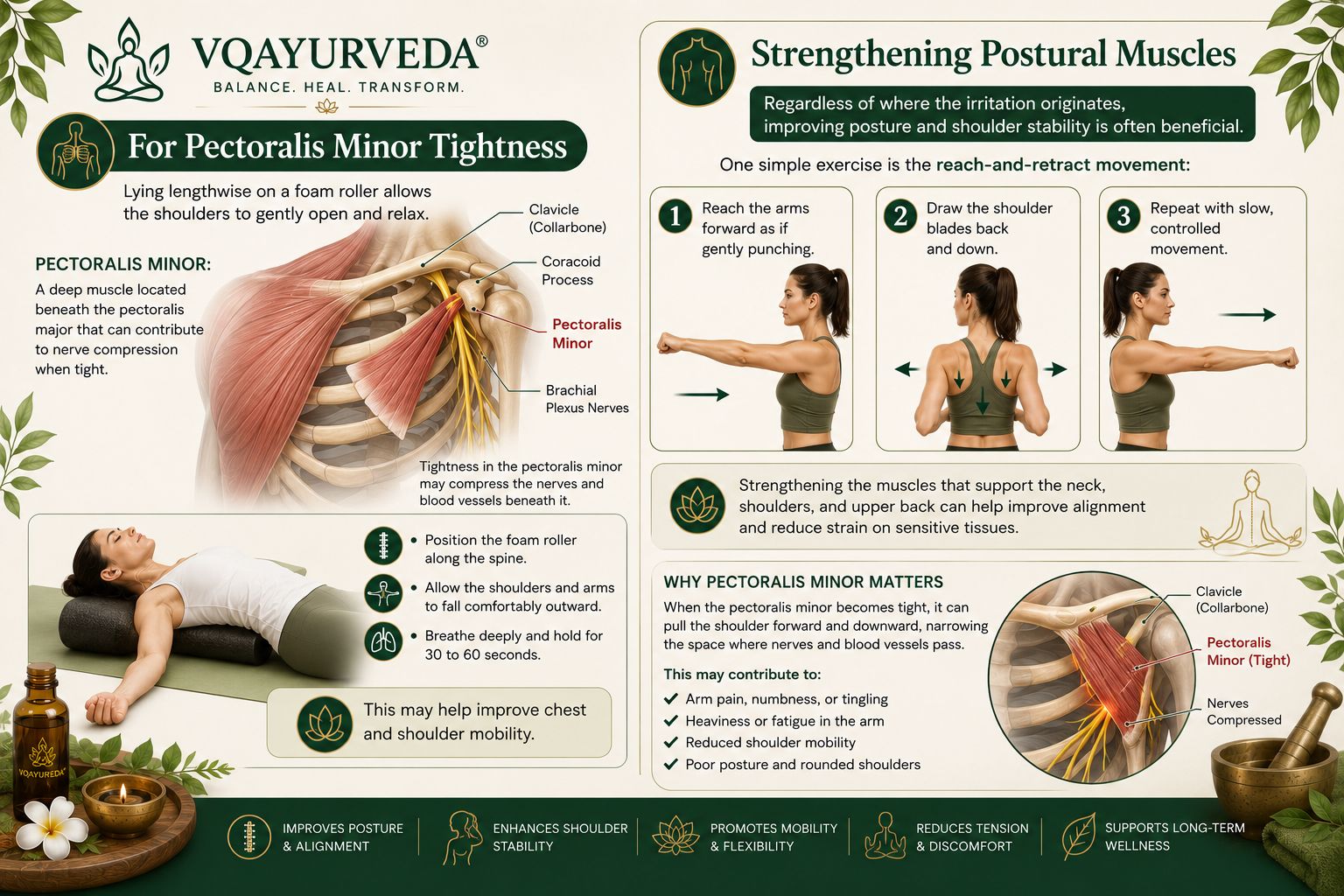
Strengthening Postural Muscles
Regardless of where the irritation originates, improving posture and shoulder stability is often beneficial.
One simple exercise is the reach-and-retract movement:
- Reach the arms forward as if gently punching.
- Draw the shoulder blades back and down.
- Repeat with slow, controlled movement.
Strengthening the muscles that support the neck, shoulders, and upper back can help improve alignment and reduce strain on sensitive tissues.
The Ayurvedic Perspective
While modern anatomy helps us understand where a nerve may be irritated or compressed, Ayurveda offers another valuable perspective by examining the body’s overall state of balance.
In Ayurvedic medicine, symptoms such as pain, numbness, tingling, stiffness, muscle tension, and restricted movement are often associated with an aggravation of Vata Dosha. Vata governs movement throughout the body, including nerve impulses, circulation, breathing, and communication between tissues.
When Vata becomes imbalanced, it may contribute to symptoms such as:
- Shooting or radiating pain
- Numbness and tingling sensations
- Muscle tightness or spasms
- Joint stiffness
- Weakness or instability
- Increased sensitivity to cold
Several factors may contribute to Vata aggravation, including chronic stress, irregular daily routines, lack of sleep, dehydration, overexertion, prolonged sitting, poor posture, aging, and exposure to cold or dry environments.
From a modern perspective, these factors can also influence muscular tension, posture, recovery, and nervous system function. This overlap creates an opportunity to combine anatomical understanding with traditional Ayurvedic principles.
Supportive Ayurvedic Approaches
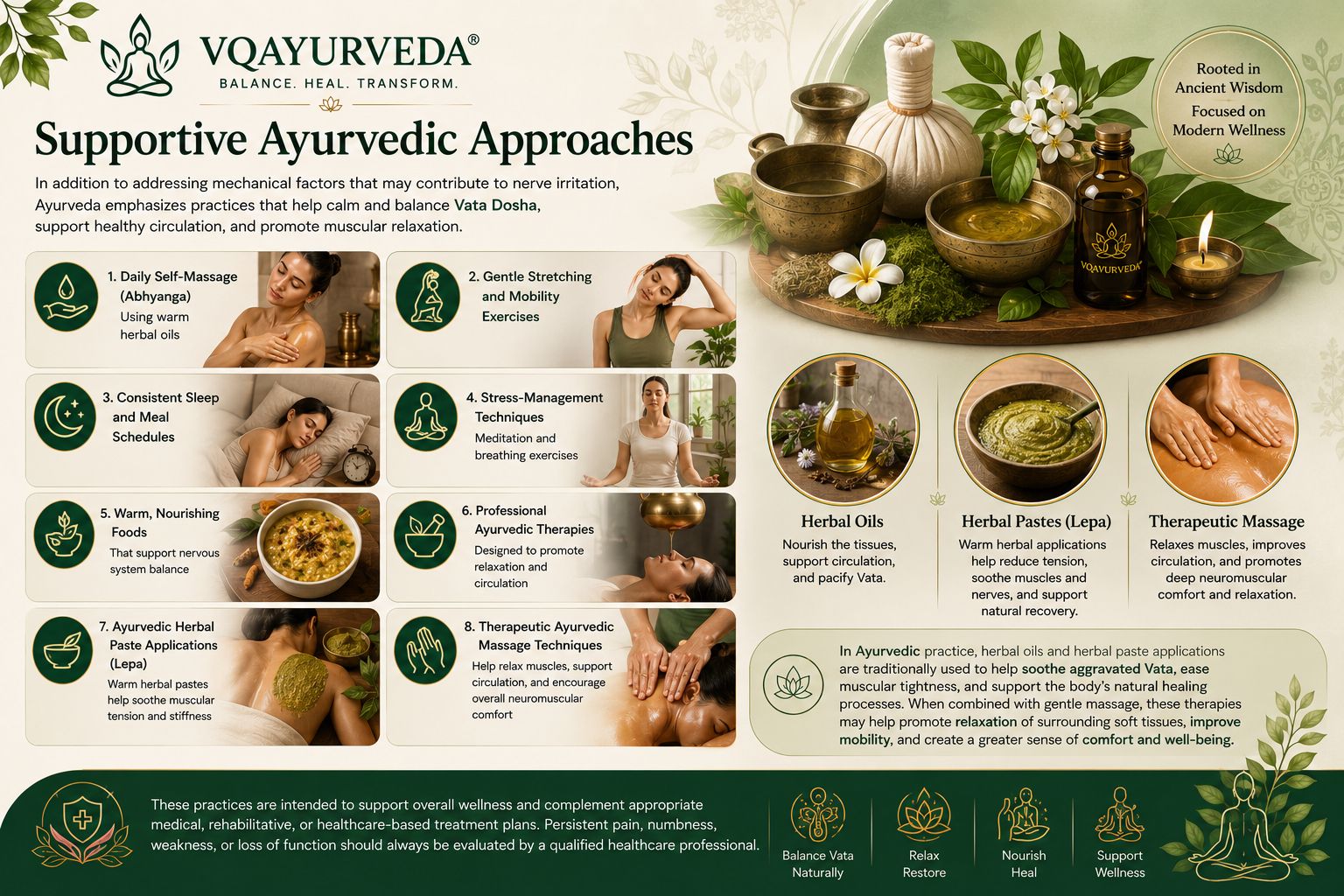
In addition to addressing mechanical factors that may contribute to nerve irritation, Ayurveda emphasizes practices that help calm and balance Vata Dosha, support healthy circulation, and promote muscular relaxation.
Supportive Ayurvedic approaches may include:
- Daily self-massage (Abhyanga) using warm herbal oils
- Gentle stretching and mobility exercises
- Consistent sleep and meal schedules
- Stress-management techniques such as meditation and * breathing exercises
- Warm, nourishing foods that support nervous system balance
- Professional Ayurvedic therapies designed to promote relaxation and circulation
- Application of warm Ayurvedic herbal pastes (Lepa) to areas of muscular tension and stiffness
- Therapeutic Ayurvedic massage techniques that help relax muscles, support circulation, and encourage overall neuromuscular comfort
In Ayurvedic practice, herbal oils and herbal paste applications are traditionally used to help soothe aggravated Vata, ease muscular tightness, and support the body’s natural healing processes. When combined with gentle massage, these therapies may help promote relaxation of surrounding soft tissues, improve mobility, and create a greater sense of comfort and well-being.
These practices are intended to support overall wellness and complement appropriate medical, rehabilitative, or healthcare-based treatment plans. Persistent pain, numbness, weakness, or loss of function should always be evaluated by a qualified healthcare professional.
In addition to addressing mechanical factors that may contribute to nerve irritation, Ayurveda emphasizes practices that help calm and balance Vata:
- Daily self-massage (Abhyanga) using warm herbal oils
- Gentle stretching and mobility exercises
- Consistent sleep and meal schedules
- Stress-management techniques such as meditation and breathing exercises
- Warm, nourishing foods that support nervous system balance
- Professional Ayurvedic therapies that promote relaxation and circulation
These practices are intended to support overall wellness and complement appropriate medical or rehabilitative care.
Final Thoughts
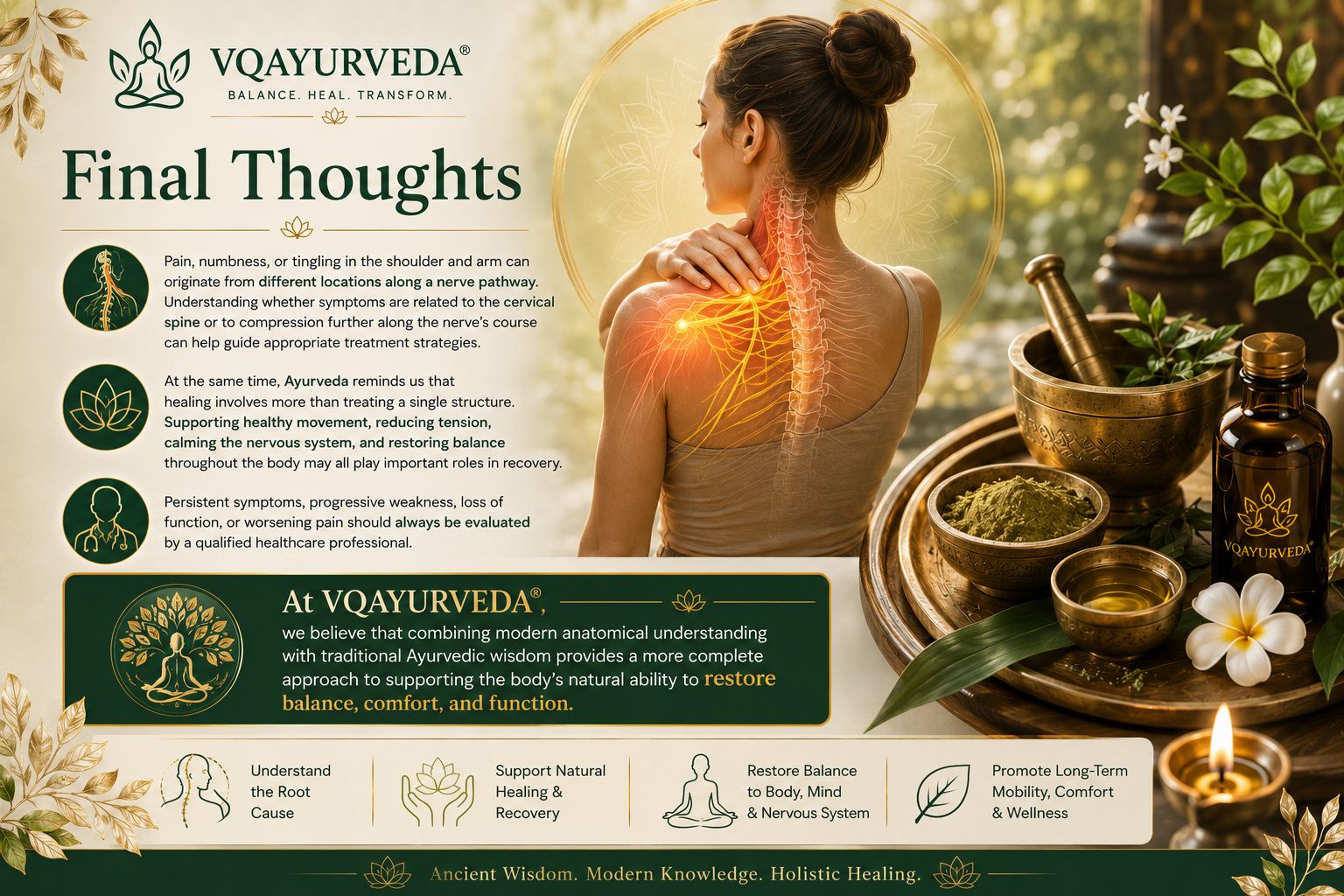
Pain, numbness, or tingling in the shoulder and arm can originate from different locations along a nerve pathway. Understanding whether symptoms are related to the cervical spine or to compression further along the nerve’s course can help guide appropriate treatment strategies.
At the same time, Ayurveda reminds us that healing involves more than treating a single structure. Supporting healthy movement, reducing tension, calming the nervous system, and restoring balance throughout the body may all play important roles in recovery.
Persistent symptoms, progressive weakness, loss of function, or worsening pain should always be evaluated by a qualified healthcare professional.
At VQAYURVEDA®, we believe that combining modern anatomical understanding with traditional Ayurvedic wisdom provides a more complete approach to supporting the body’s natural ability to restore balance, comfort, and function.