

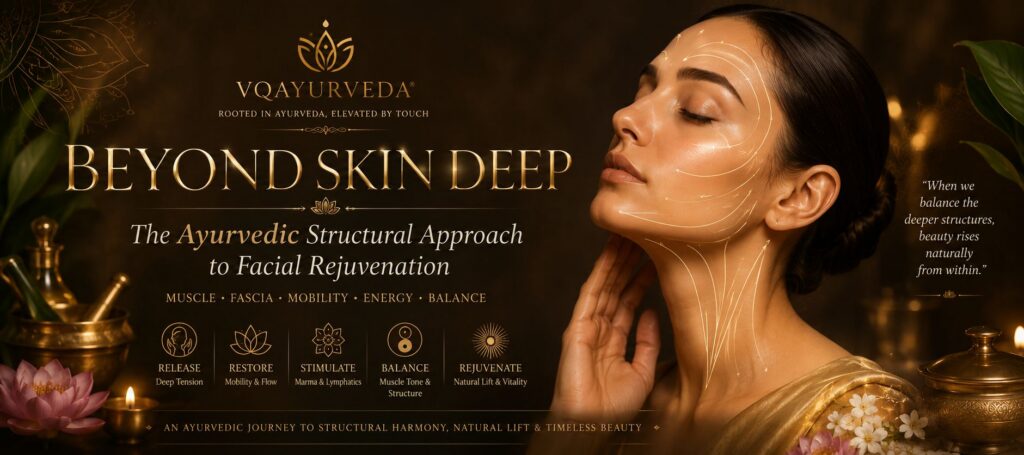
In modern aesthetics, facial aging is often viewed only from the surface — wrinkles, sagging skin, heaviness, or loss of contour.
However, from an Ayurvedic and structural therapeutic perspective, the face is not simply skin. It is a living network of muscles, fascia, connective tissue, circulation, lymphatic flow, nervous system activity, and energetic balance.
Very often, the visible signs of aging begin much deeper within the structural and muscular foundations of the face.
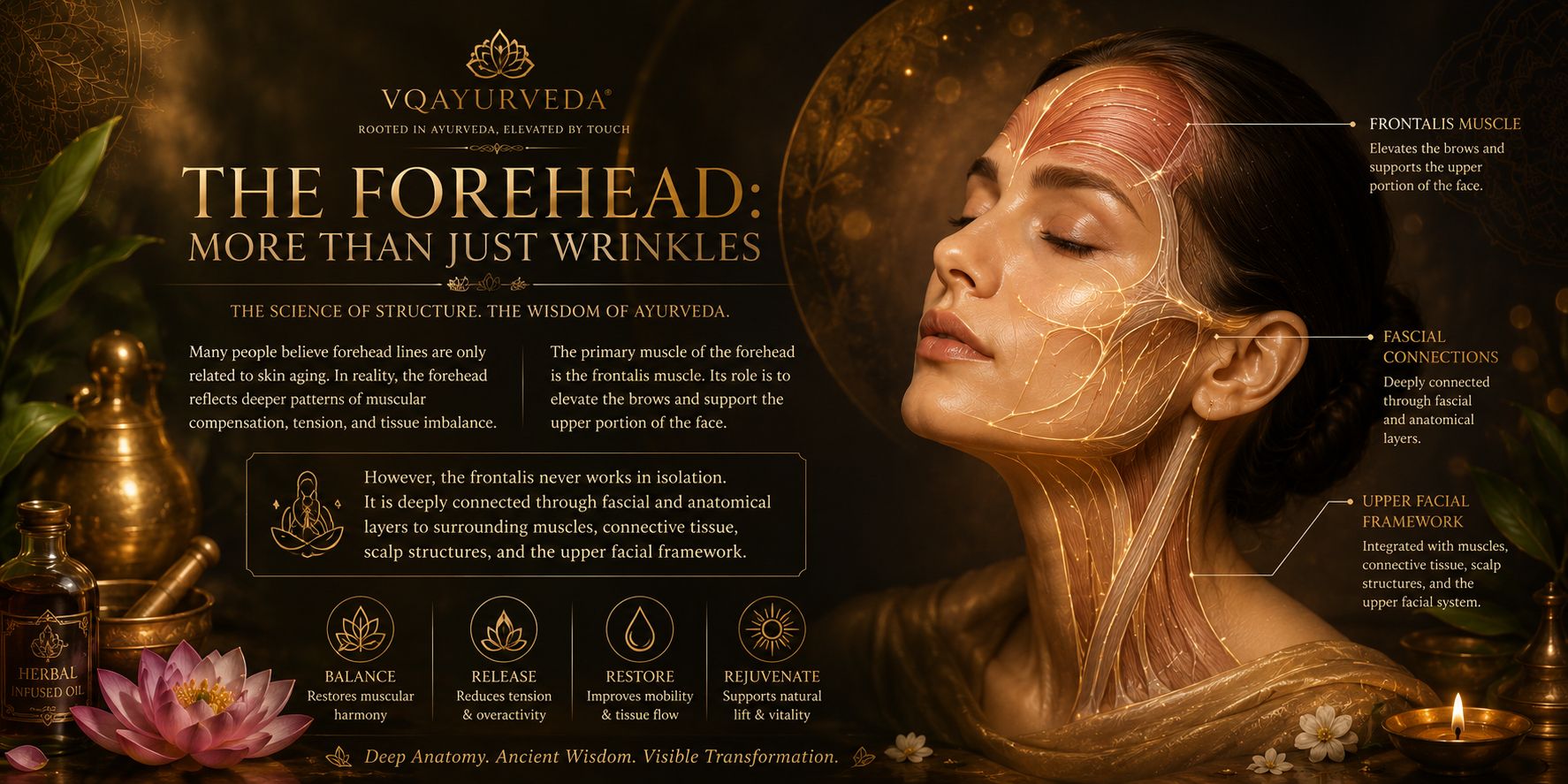
The Forehead: More Than Just Wrinkles
Many people believe forehead lines are only related to skin aging. In reality, the forehead reflects deeper patterns of muscular compensation, tension, and tissue imbalance.
The primary muscle of the forehead is the frontalis muscle. Its role is to elevate the brows and support the upper portion of the face. However, the frontalis never works in isolation. It is deeply connected through fascial and anatomical layers to surrounding muscles, connective tissue, scalp structures, and the upper facial framework.
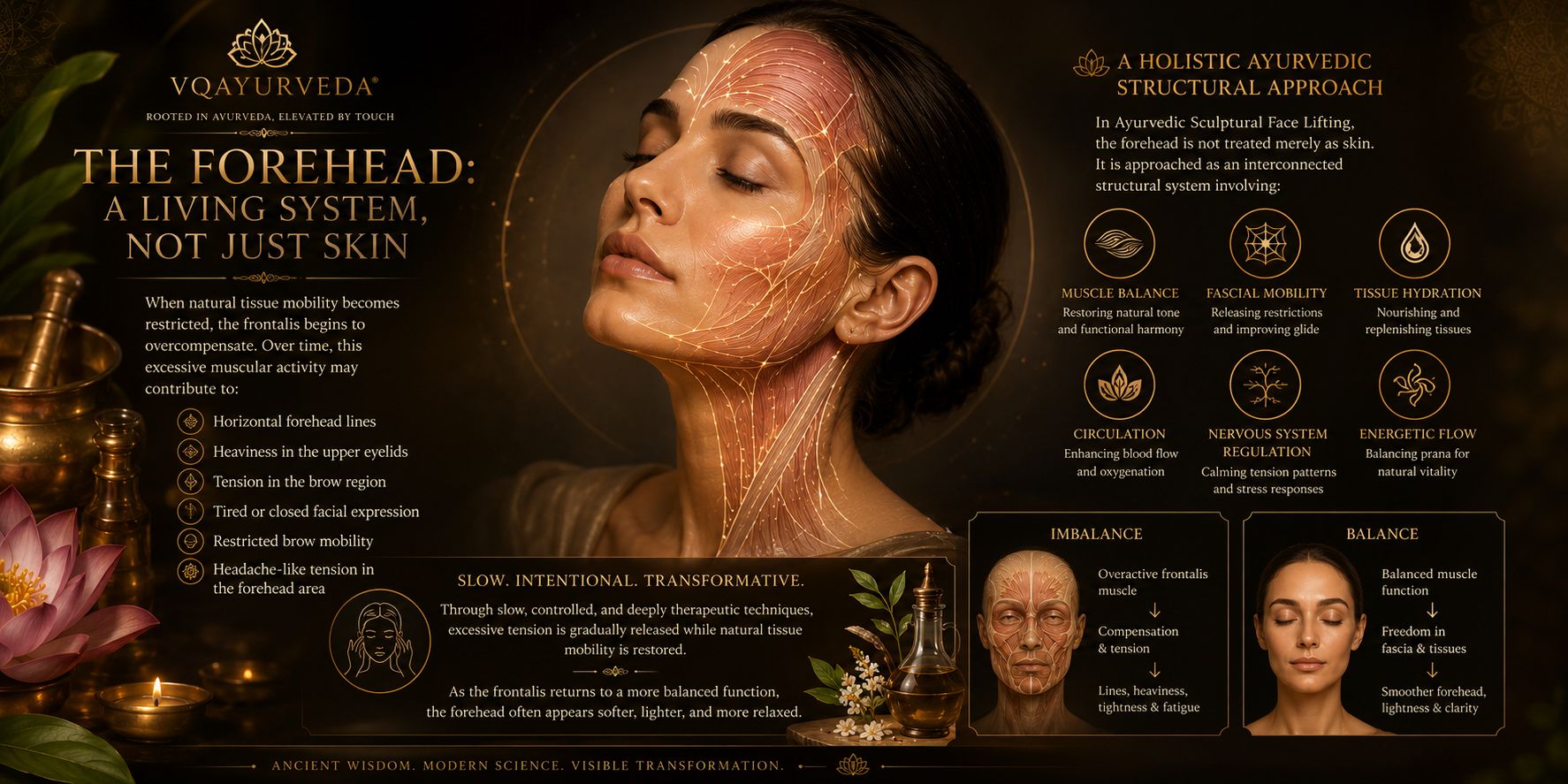
When natural tissue mobility becomes restricted, the frontalis begins to overcompensate.
Over time, this excessive muscular activity may contribute to:
- horizontal forehead lines,
- heaviness in the upper eyelids,
- tension in the brow region,
- tired or closed facial expression,
- restricted brow mobility,
- and headache-like tension in the forehead area.
In Ayurvedic Sculptural Face Lifting, the forehead is not treated merely as skin.
It is approached as an interconnected structural system involving:
- muscle balance,
- fascial mobility,
- tissue hydration,
- circulation,
- nervous system regulation,
- and energetic flow.
Through slow, controlled, and deeply therapeutic techniques, excessive tension is gradually released while natural tissue mobility is restored. As the frontalis returns to a more balanced function, the forehead often appears softer, lighter, and more relaxed.
The Mandible: The Structural Foundation of the Lower Face
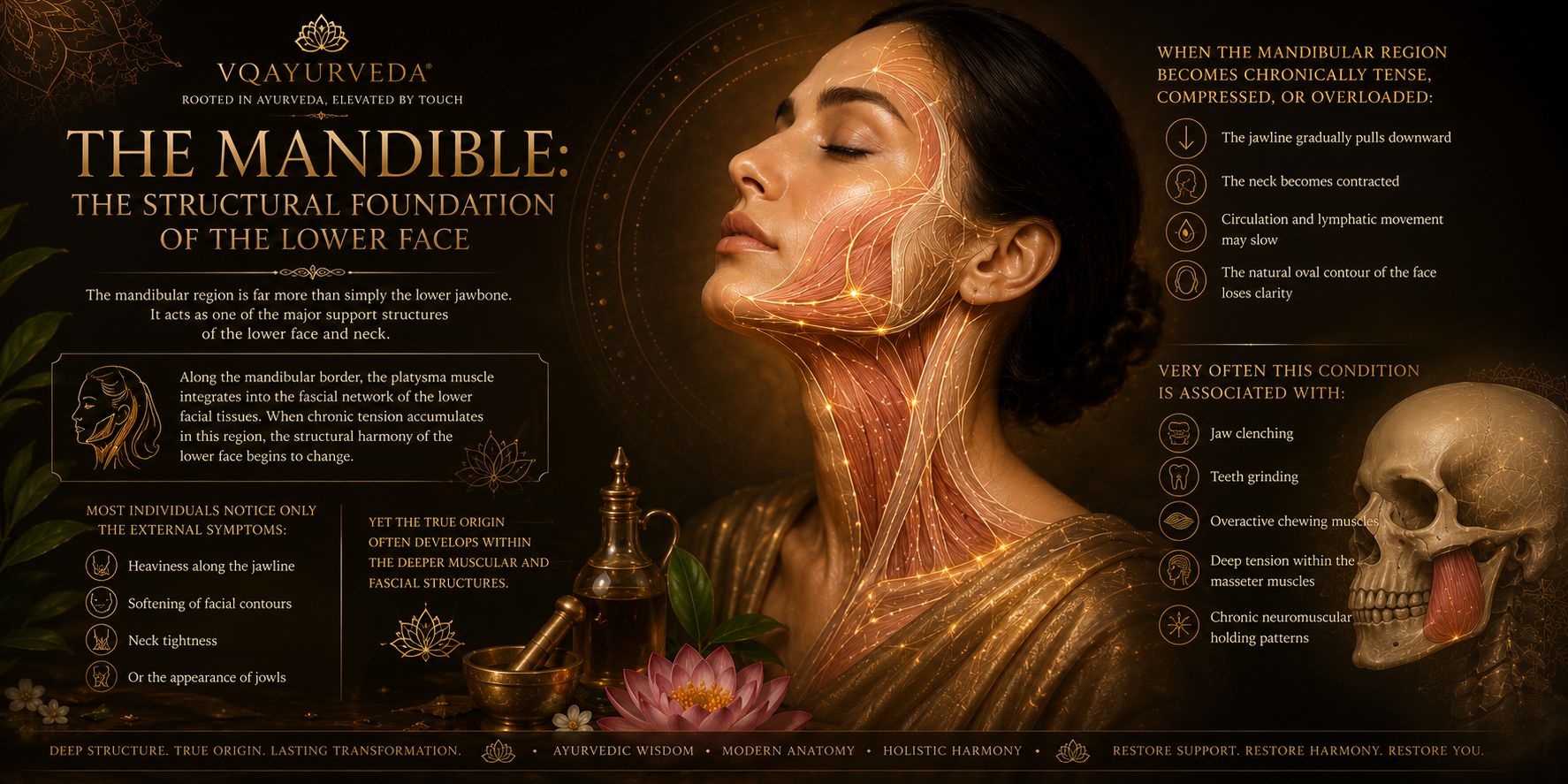
The mandibular region is far more than simply the lower jawbone.
It acts as one of the major support structures of the lower face and neck.
Along the mandibular border, the platysma muscle integrates into the fascial network of the lower facial tissues. When chronic tension accumulates in this region, the structural harmony of the lower face begins to change.
Most individuals notice only the external symptoms:
- heaviness along the jawline,
- softening of facial contours,
- neck tightness,
- or the appearance of jowls.
Yet the true origin often develops within the deeper muscular and fascial structures.
When the mandibular region becomes chronically tense, compressed, or overloaded:
- the jawline gradually pulls downward,
- the neck becomes contracted,
- circulation and lymphatic movement may slow,
- and the natural oval contour of the face loses clarity.
Very often this condition is associated with:
- jaw clenching,
- teeth grinding,
- overactive chewing muscles,
- deep tension within the masseter muscles,
- and chronic neuromuscular holding patterns.
The Ayurvedic Sculptural Lifting Approach
In Ayurvedic Sculptural Face Lifting, the goal is not simply cosmetic enhancement.
The therapy works to restore harmony within the deeper structural and energetic systems of the face.
This approach may include:
- release of deep mandibular tension,
- restoration of fascial mobility,
- stimulation of marma and lymphatic pathways,
- balancing of muscular tone,
- support of healthy circulation,
- and regulation of nervous system tension patterns.
Rather than forcing the tissues superficially, the treatment supports the face through its natural anatomical foundations.
Herbal oils, mindful touch, structural lifting techniques, and nervous system relaxation work together to encourage:
- softer facial expression,
- improved contour,
- reduction of excessive muscular holding,
- enhanced tissue vitality,
- and a more naturally lifted appearance.
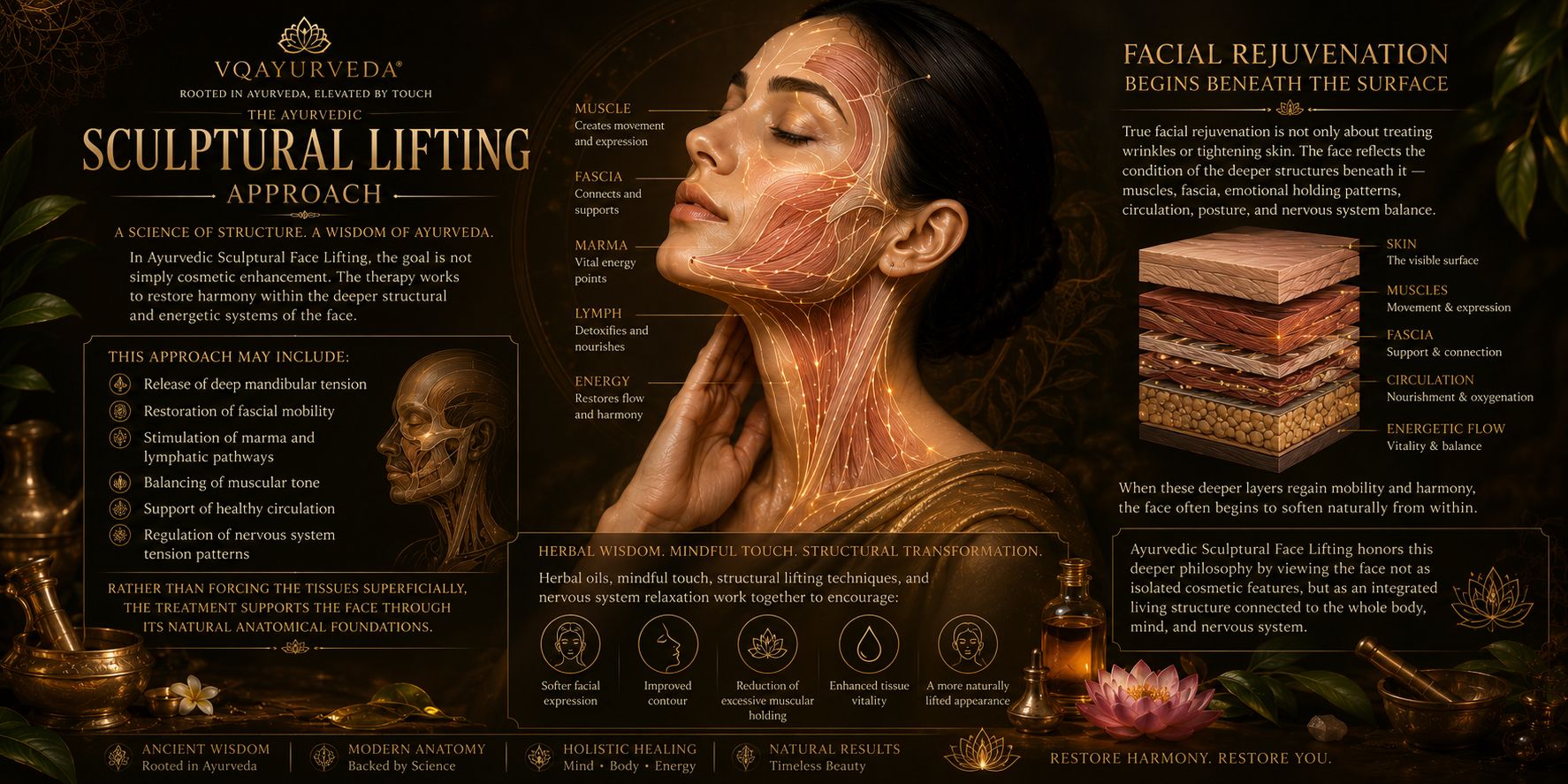
Facial Rejuvenation Begins Beneath the Surface
True facial rejuvenation is not only about treating wrinkles or tightening skin.
The face reflects the condition of the deeper structures beneath it — muscles, fascia, emotional holding patterns, circulation, posture, and nervous system balance.
When these deeper layers regain mobility and harmony, the face often begins to soften naturally from within.
Ayurvedic Sculptural Face Lifting honors this deeper philosophy by viewing the face not as isolated cosmetic features, but as an integrated living structure connected to the whole body, mind, and nervous system.