

Discover the ancient wisdom of herbal combinations, the science of absorption, and the fascinating art of Ayurvedic preparation.
What if the secret of an herbal preparation lies not only in the ingredients, but in how they are combined?
For thousands of years, Ayurveda has approached medicinal plants through a sophisticated understanding of their qualities, preparation methods, and relationships with the human body.
One of its most recognizable botanical ingredients is Haridra (Curcuma longa), commonly known as turmeric.
Its brilliant golden colour has made it famous around the world. Yet beyond its appearance lies a fascinating relationship between traditional Ayurvedic knowledge and modern phytochemistry.
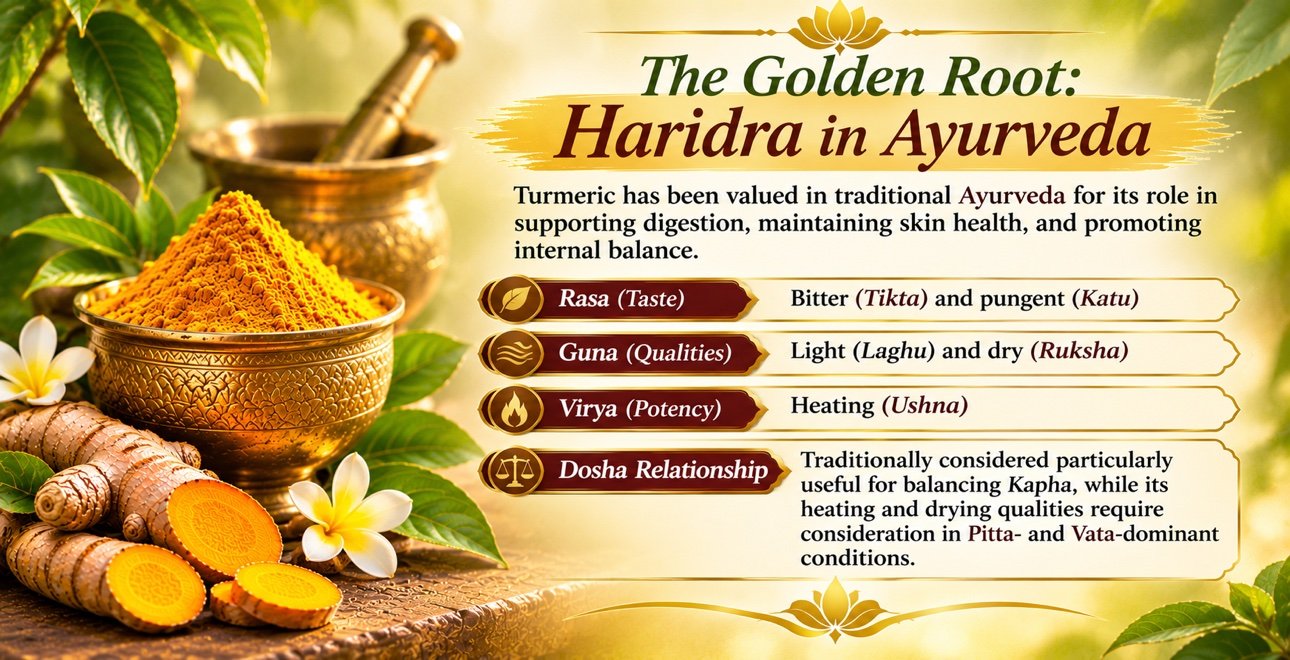
1. The Golden Root: Haridra in Ayurveda
Turmeric has been valued in traditional Ayurveda for its role in supporting digestion, maintaining skin health, and promoting internal balance.
Ayurvedic practitioners traditionally describe Haridra through several properties:
- Rasa (taste): Bitter (Tikta) and pungent (Katu).
- Guna (qualities): Light (Laghu) and dry (Ruksha).
- Virya (potency): Heating (Ushna).
- Dosha relationship: Traditionally considered particularly useful for balancing Kapha, while its heating and drying qualities require consideration in Pitta- and Vata-dominant conditions.
In modern science, turmeric is studied for its curcuminoids, particularly curcumin, which has demonstrated antioxidant and anti-inflammatory activity in laboratory research.
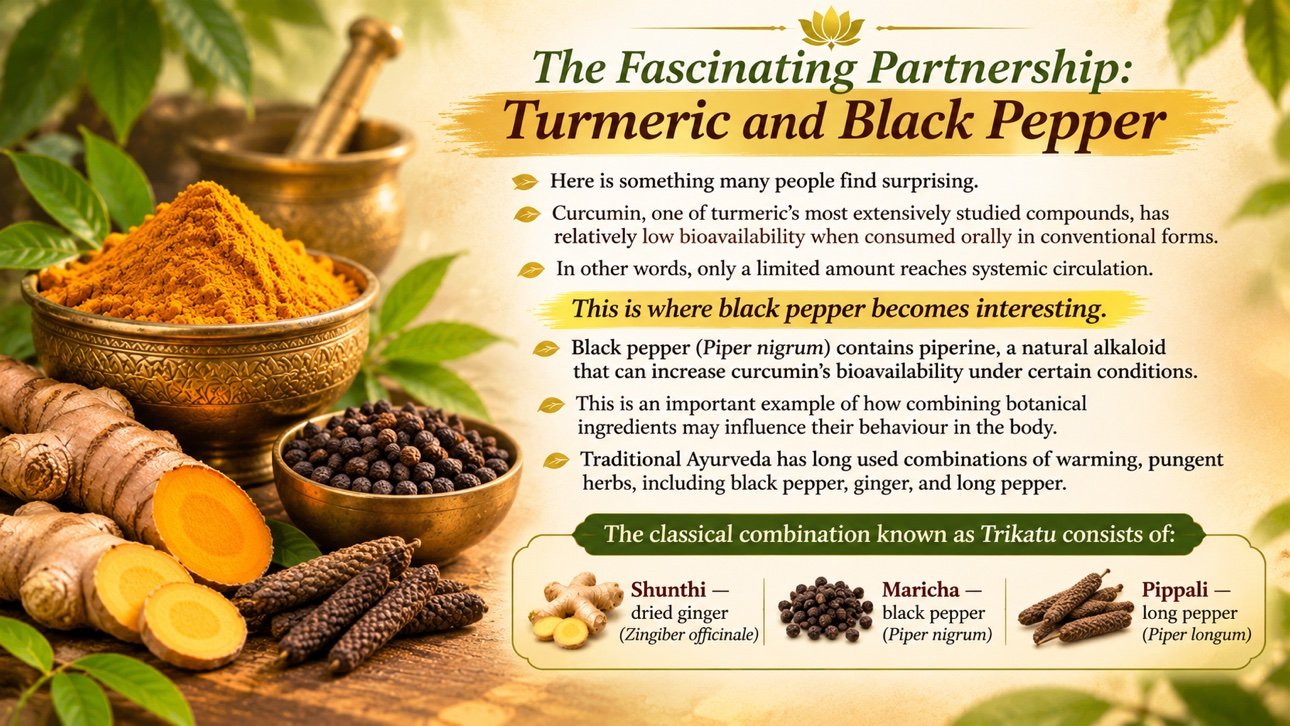
2. The Fascinating Partnership: Turmeric and Black Pepper
Here is something many people find surprising.
Curcumin, one of turmeric’s most extensively studied compounds, has relatively low bioavailability when consumed orally in conventional forms.
In other words, only a limited amount reaches systemic circulation.
This is where black pepper becomes interesting.
Black pepper (Piper nigrum) contains piperine, a natural alkaloid that can increase curcumin’s bioavailability under certain conditions.
This is an important example of how combining botanical ingredients may influence their behaviour in the body.
Traditional Ayurveda has long used combinations of warming, pungent herbs, including black pepper, ginger, and long pepper.
The classical combination known as Trikatu consists of:
- Shunthi — dried ginger (Zingiber officinale)
- Maricha — black pepper (Piper nigrum)
- Pippali — long pepper (Piper longum)
Trikatu is traditionally associated with Deepana (supporting digestive fire) and Pachana (supporting digestion and metabolic transformation).
The combination of turmeric and black pepper offers remarkable benefits. Turmeric contains curcumin, a natural compound valued for its antioxidant and anti-inflammatory properties, while black pepper contains piperine, which can significantly enhance curcumin absorption. Together, these botanicals create a powerful partnership that has attracted scientific interest for its potential to support joint comfort, digestive well-being, and the body’s natural inflammatory balance.
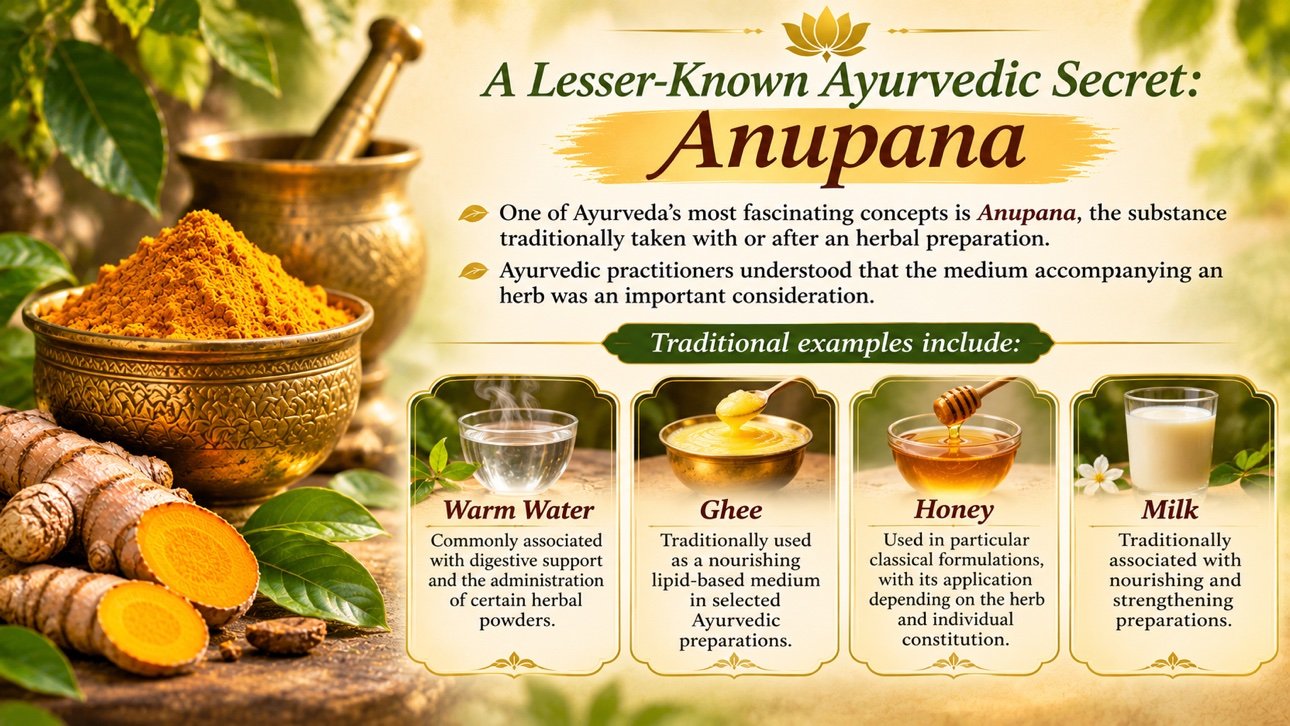
3. A Lesser-Known Ayurvedic Secret: Anupana
One of Ayurveda’s most fascinating concepts is Anupana, the substance traditionally taken with or after an herbal preparation.
Ayurvedic practitioners understood that the medium accompanying an herb was an important consideration.
Traditional examples include:
- Warm water: Commonly associated with digestive support and the administration of certain herbal powders.
- Ghee: Traditionally used as a nourishing lipid-based medium in selected Ayurvedic preparations.
- Honey: Used in particular classical formulations, with its application depending on the herb and individual constitution.
- Milk: Traditionally associated with nourishing and strengthening preparations.
These substances are not interchangeable. Their selection depends on the preparation, the individual, and the intended Ayurvedic application.
Ayurveda has long recognized that the medium accompanying an herbal preparation is an important part of its formulation. Modern pharmaceutical research also examines how delivery mediums influence the solubility, absorption, and bioavailability of botanical compounds.
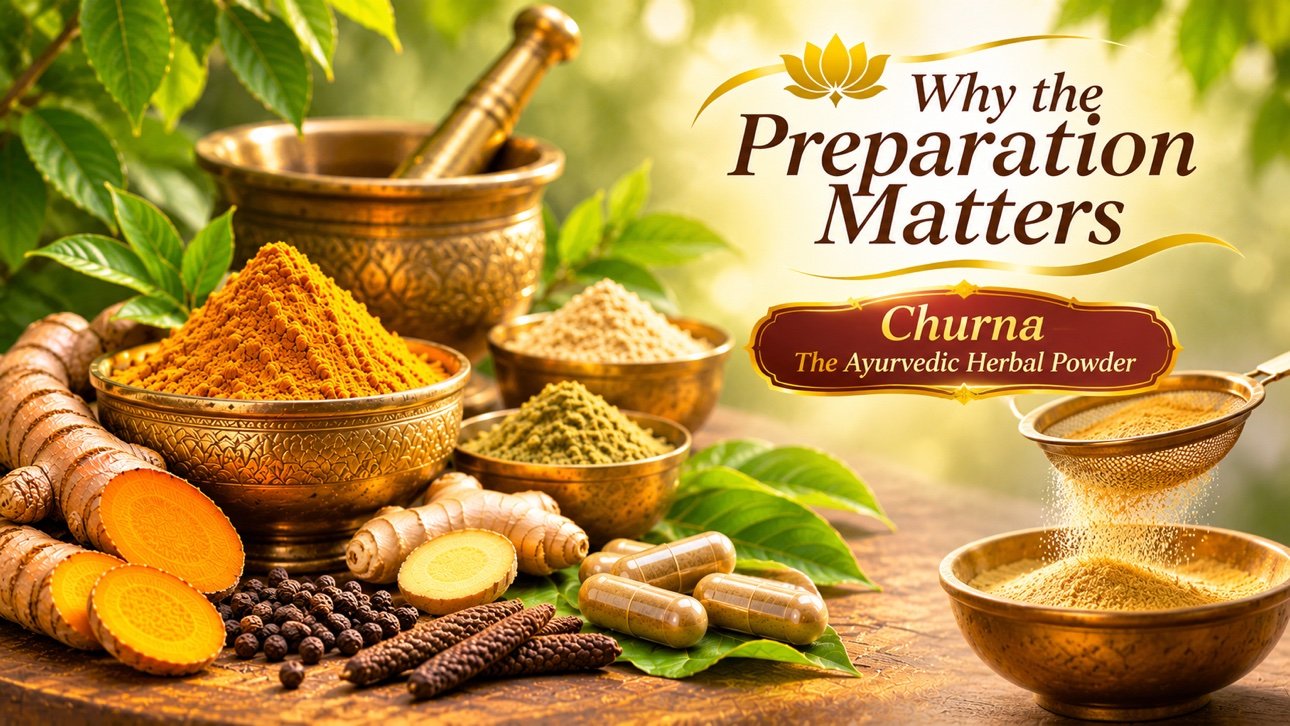
4. Why the Preparation Matters
In Ayurveda, powdered herbal preparations are known as Churna.
The preparation of Churna traditionally involves selecting, cleaning, drying, grinding, and sometimes sieving botanical materials.
The fineness of the powder, the botanical species used, and the proportions of ingredients are important aspects of formulation.
Today, herbal powders may also be placed into capsules for convenience.
Yet a capsule is simply a dosage form. The quality of an herbal preparation depends on much more than its appearance.
Accurate botanical identification, ingredient purity, appropriate proportions, and quality control remain essential.
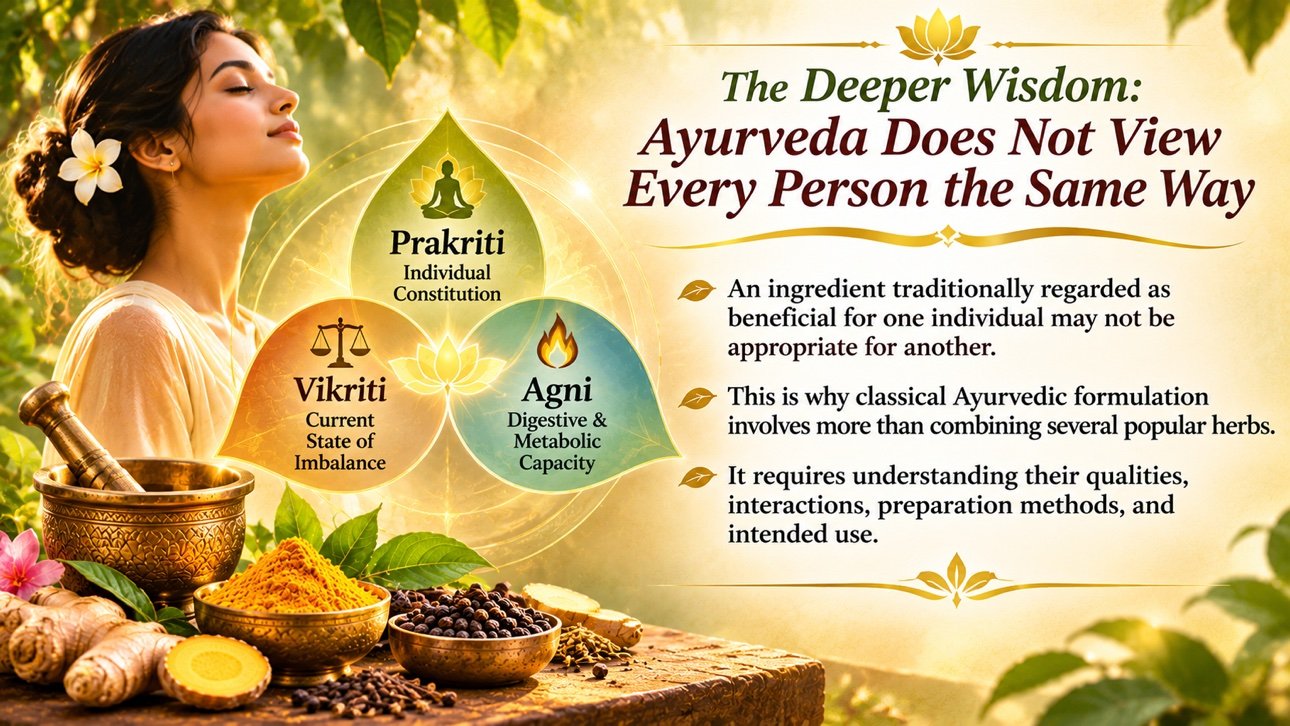
5. The Deeper Wisdom: Ayurveda Does Not View Every Person the Same Way
Perhaps one of Ayurveda’s most distinctive principles is its emphasis on individual constitution.
The traditional concepts of Prakriti (individual constitution), Vikriti (current state of imbalance), and Agni (digestive and metabolic capacity) guide how practitioners evaluate herbal preparations.
An ingredient traditionally regarded as beneficial for one individual may not be appropriate for another.
This is why classical Ayurvedic formulation involves more than combining several popular herbs.
It requires understanding their qualities, interactions, preparation methods, and intended use.
6. Ancient Ayurvedic Wisdom Meets Modern Research
Turmeric (Curcuma longa), traditionally known as Haridra, has held an important place in Ayurvedic medicine for thousands of years. Valued for its remarkable therapeutic properties, it has traditionally been used to support digestive health, joint comfort, skin health, and the body’s natural balance.
Modern scientific research continues to explore the extraordinary potential of turmeric, particularly its principal bioactive compound, curcumin.
Curcumin has demonstrated antioxidant and anti-inflammatory properties in experimental research, while clinical studies have explored its potential benefits for joint mobility, stiffness, and discomfort associated with osteoarthritis.
One of the most fascinating aspects of turmeric is its relationship with other botanicals. Black pepper (Piper nigrum), containing the natural compound piperine, can enhance curcumin’s bioavailability, illustrating the importance of carefully selected herbal combinations.
In Ayurveda, the art of formulation extends beyond the properties of individual plants. It embraces the harmonious combination of herbs, their preparation methods, their traditional energetic qualities, and their relationship with each individual’s constitution.
The enduring wisdom of Ayurveda lies in understanding not only the therapeutic qualities of medicinal plants, but also the art of combining and preparing them to support health and well-being.
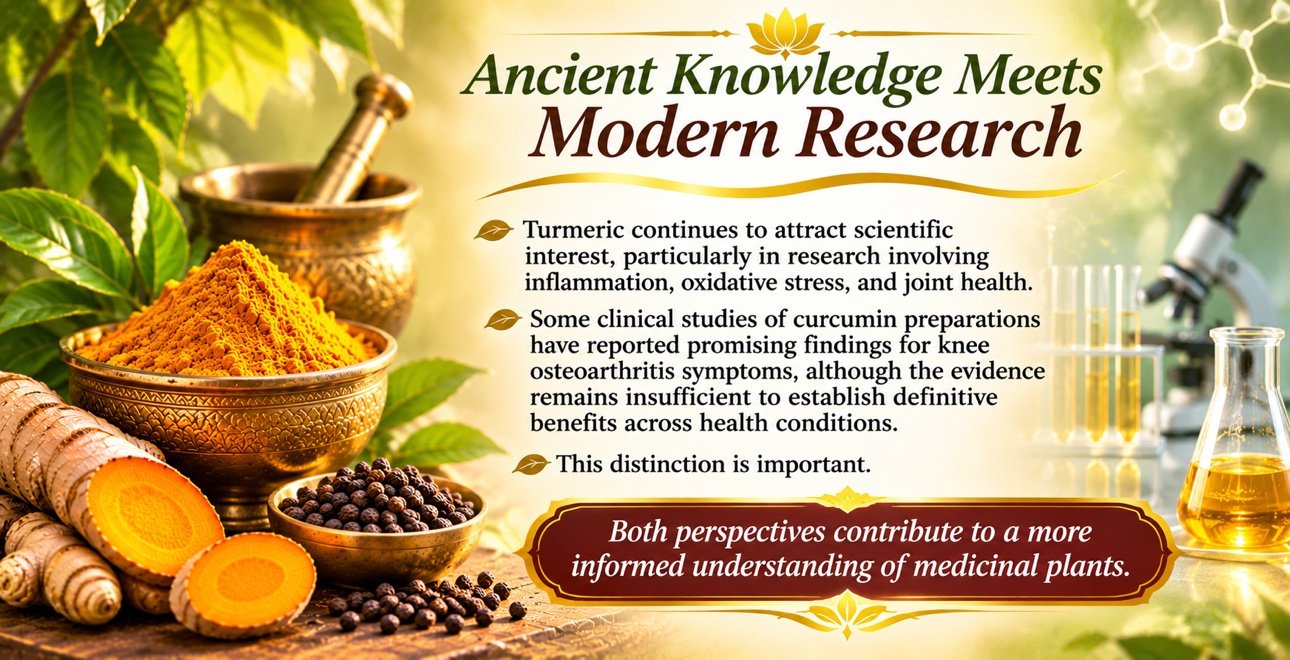
Ancient Knowledge Meets Modern Research
Turmeric continues to attract scientific interest, particularly in research involving inflammation, oxidative stress, and joint health.
Some clinical studies of curcumin preparations have reported promising findings for knee osteoarthritis symptoms, although the evidence remains insufficient to establish definitive benefits across health conditions.
This distinction is important.
Both perspectives contribute to a more informed understanding of medicinal plants.
The Golden Lesson
The true beauty of Ayurveda is not found in the colour of a powder or the number of ingredients in a capsule.
It lies in the philosophy behind the preparation.
Why was this plant selected?
Why was it combined with another?
How was it prepared?
And why might the same formulation be appropriate for one person but not another?
These are the questions that transform an ordinary herbal mixture into a fascinating subject of study.
Because in Ayurveda, understanding the relationship between ingredients is just as important as understanding the ingredients themselves.
VQAYURVEDA® — Exploring the wisdom of Ayurveda through traditional knowledge and modern understanding.
Featured on Salon Cassiopé
Published by Salon Cassiopé
Educational note: This article explores traditional Ayurvedic concepts alongside related Indian philosophical teachings. These concepts are presented as traditional philosophical frameworks, not as medical diagnoses, and the article is intended for educational purposes only. It does not replace professional medical or psychological care.